

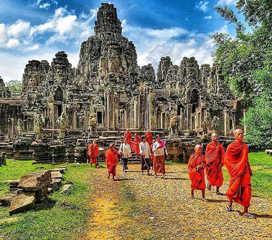


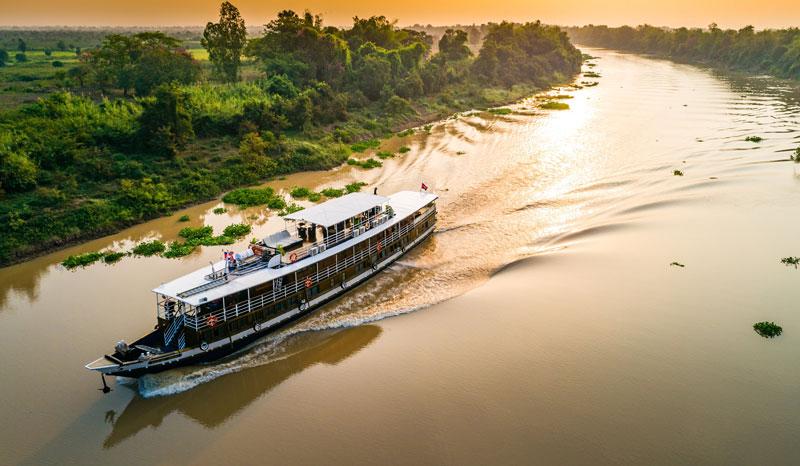
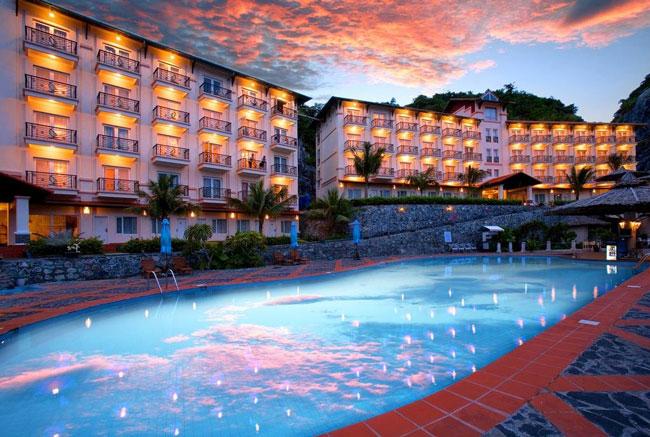


Planning a cambodia trip? Let us help.
Get personalized travel plan based on your interest, budget and preferred travel dates
Today, Threeland Travel will take you to explore one of the seven natural wonders called Angkor Wat located in Siem Riep province, 315km northwest of the capital Phnompenh.
TABLE OF CONTENTS
1
Overview of Angkor Wat
2
History of Angkor Wat
3
What Makes Angkor Wat Architecture So Famous?
4
How to Travel to Angkor Wat
By air
By bus
Getting around Angkor
5
Angkor Wat Tickets and Opening Hours
6
Top 4 Most Beautiful Temples in Angkor
Angkor Wat
Bayon Temple
Ta Prohm Temple
Ta Keo Temple
7
When Is the Best Time for Angkor Wat Sunrise and Sunset?
Sunrise
Sunset
8
Travel Tips for Visiting Angkor Wat
9
Why Angkor Wat Is Worth the Trip
10
FAQs
How many days should I spend exploring Angkor Wat?
What is the best time to visit Angkor Wat?
Can Angkor Wat be visited in one day?
Is Angkor Wat worth visiting?
Angkor Wat is in Siem Reap, northwestern Cambodia, and it’s the single most important stop in the country for history, architecture, and culture. If you’re looking up the Angkor Wat location, it sits about 315 kilometers northwest of Phnom Penh inside the vast Angkor Archaeological Park. For many travelers, it’s the highlight of Cambodia and one of the best temple sites anywhere in Asia.
Cambodia shares a long border with Vietnam, which is one reason multi-country trips are so popular. Phnom Penh is only about 240 kilometers by road from Ho Chi Minh City, so crossing between the two countries is fairly straightforward. That’s why Angkor often appears in a Vietnam travel package, a Vietnam trip package, or a longer Indochina route that pairs Cambodia with Vietnam and Laos.
Overview of Angkor Wat
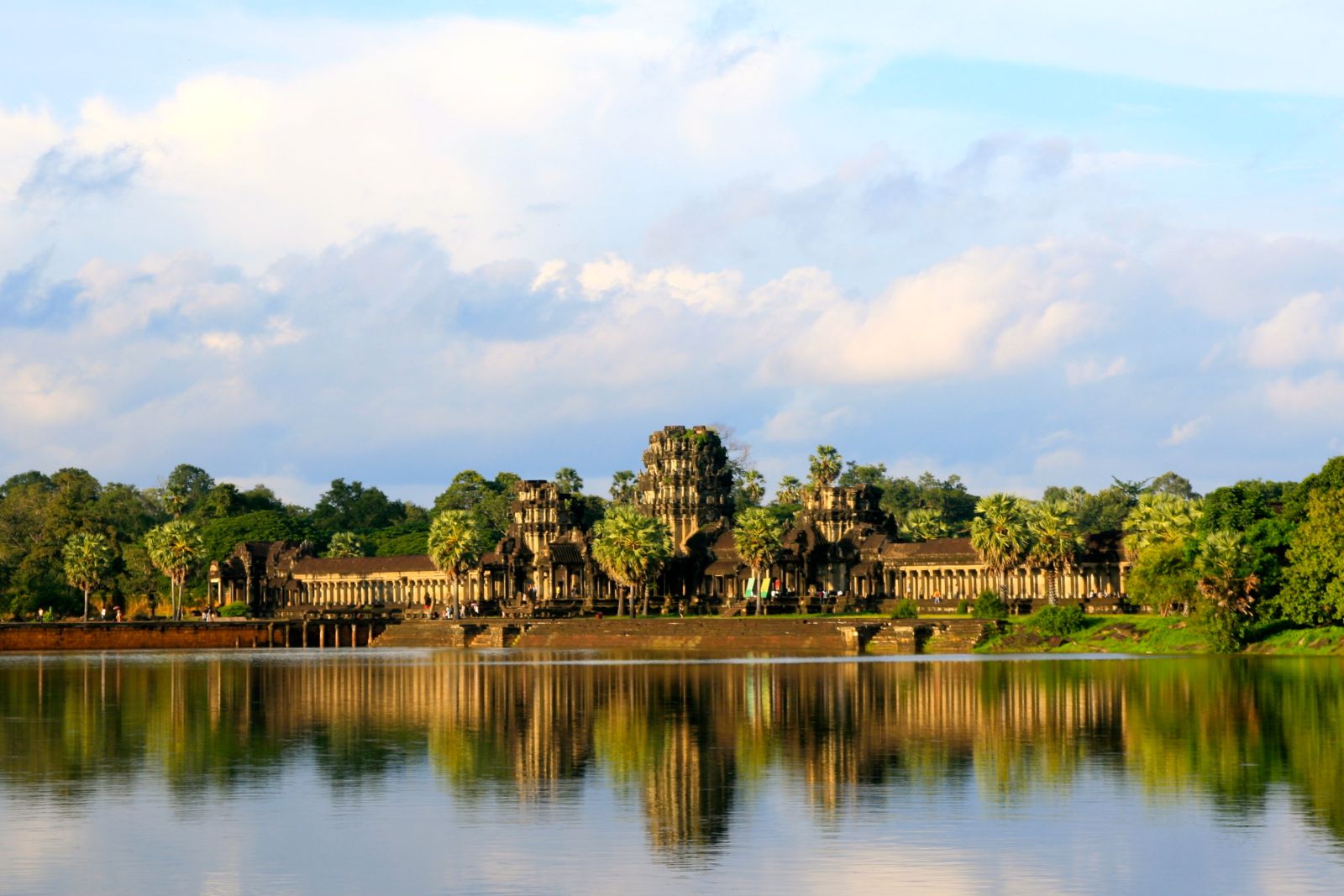 Angkor Wat is the largest religious monument in the world, covering about 162.6 hectares. It was built in the early 12th century under King Suryavarman II as a Hindu temple dedicated to Vishnu, then gradually became a Buddhist site over the centuries.
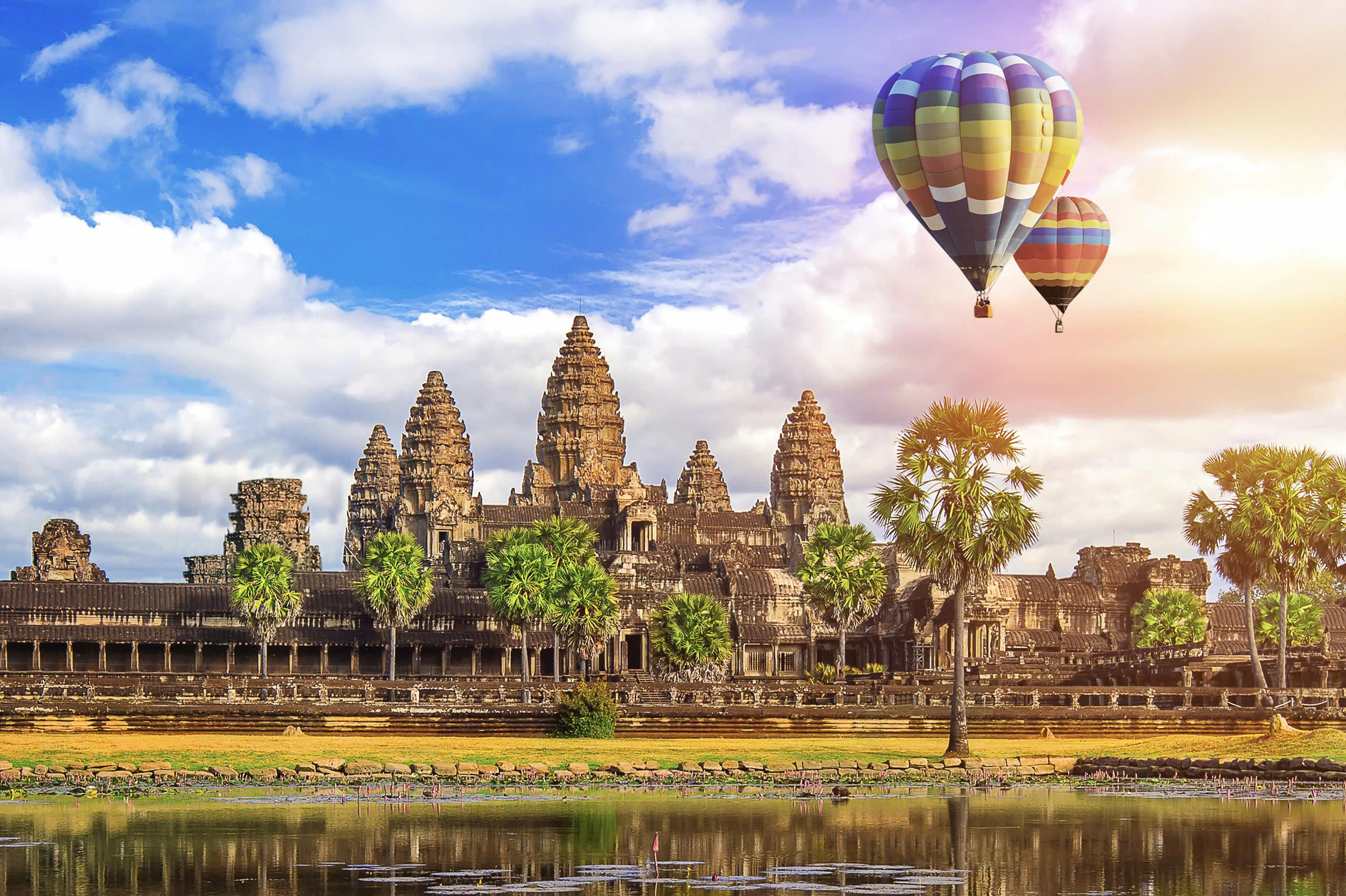
The temple was constructed in the ancient capital of Yaśodharapura, in what is now the Angkor area near Siem Reap. It still stands as the best-preserved monument in the entire Angkor complex, and its five towers are so iconic that they appear on Cambodia’s national flag.
Travelers planning a broader regional journey often add Angkor to a Vietnam country tour or a custom Cambodia extension. It fits naturally into routes that begin in Ho Chi Minh City, continue through Phnom Penh, and end in Siem Reap.
History of Angkor Wat
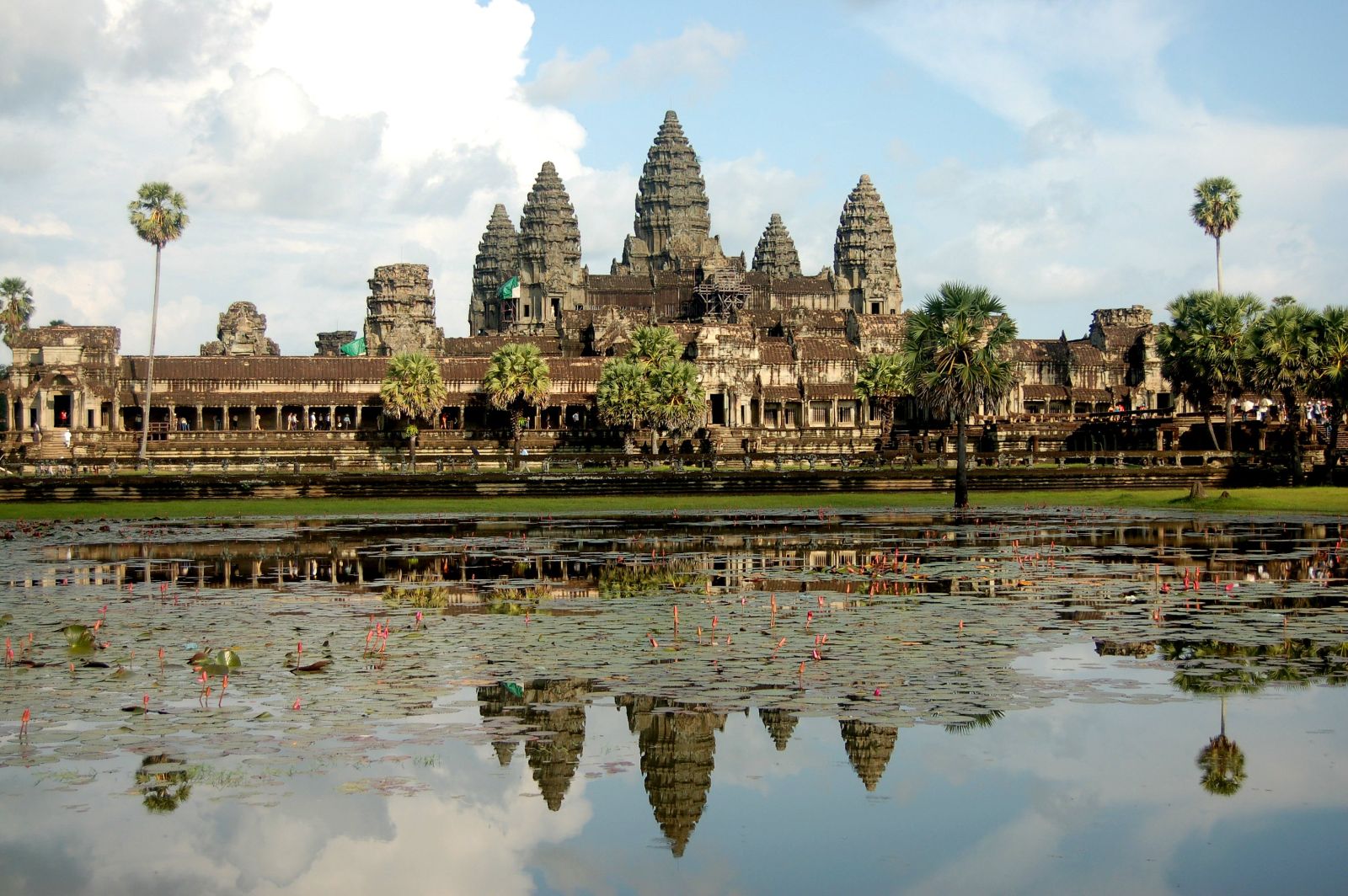 Angkor Wat belongs to the much larger Angkor Archaeological Park, a protected area of roughly 400 square kilometers filled with temple ruins, reservoirs, and the remains of old Khmer capitals.
Legend says the temple was built by order of Indra as a heavenly palace for his son. Historically, though, Angkor Wat was commissioned by Suryavarman II in the first half of the 1100s. The design reflects Hindu cosmology, especially the idea of the universe centered on Mount Meru.
In 1586, Portuguese friar António da Madalena became one of the first recorded Europeans to visit the site. He wrote about it in terms of sheer awe, which makes sense. Even now, it’s hard to take in on first sight.
One thing people get wrong: Angkor Wat was never fully abandoned. Buddhist monks continued to use and care for it after the Khmer Empire declined, which helped preserve the temple far better than many ancient sites. In 1992, Angkor was named a UNESCO World Heritage Site, a major step in long-term conservation.
What Makes Angkor Wat Architecture So Famous?
Angkor Wat is the high point of Khmer architecture. Its design combines the temple-mountain form with long galleries and corridors, creating a symbolic model of Mount Meru, the sacred mountain at the center of the Hindu universe.
Key features include:
- a huge moat surrounding the complex
- an outer wall stretching about 3.6 kilometers
- three rising terrace levels
- five central towers representing Mount Meru
- a main tower rising to roughly 65 meters
The four surrounding towers are lower, around 40 meters, which makes the central spire feel even more dramatic.
Angkor Wat also faces west, which is unusual for a major Khmer temple. Scholars still debate exactly why, but the orientation adds to its mystique. The walls are covered in extraordinary carvings showing Hindu myths, military scenes, royal processions, and thousands of apsaras, the celestial dancers that have become one of Angkor’s visual signatures.
How to Travel to Angkor Wat
By air
The main air gateway is now Siem Reap-Angkor International Airport. It replaced the old Siem Reap airport, so that’s the airport you should use when booking flights. From Vietnam, flying is still the quickest option. Flights from Ho Chi Minh City are short, and some itineraries also connect through Phnom Penh or other regional hubs.
If you’re piecing together a Vietnam tour package, adding Siem Reap by air is usually the easiest move.
By bus
Travelers coming overland can reach Siem Reap by bus from Ho Chi Minh City, usually with either a direct service or a change in Phnom Penh. Expect a long day on the road, often around 12 to 14 hours depending on the route and border crossing. Fares vary by operator, but buses remain a popular budget choice for people doing Vietnam package travel across Indochina.
Getting around Angkor
Inside the park, tuk-tuks are still the most practical way to move between temples. Drivers know the classic circuits well and can help shape a sensible day. A basic Angkor Wat tour by tuk-tuk often costs around $15 to $25 for the day, depending on distance, sunrise starts, and your negotiating skills.
Angkor Wat Tickets and Opening Hours
All foreign visitors need an Angkor Pass to enter the park.
Current Angkor Wat tickets are:
- 1-day pass: $37
- 3-day pass: $62, valid over 7 days
- 7-day pass: $72, valid over 30 days
You can buy passes online or at the official Angkor Enterprise ticket office on Road 60 near Siem Reap. Tickets bought after 5:00 PM are valid for the following day, which is handy if you want to get organized before an early start.
The ticket office is open daily from 5:00 AM to 5:30 PM. Park access begins at 5:00 AM, and the general closing time for the park is 6:30 PM, though individual temples can have different hours. For sunrise at Angkor Wat, get there early. Very early.
Top 4 Most Beautiful Temples in Angkor
.jpg)
Angkor Wat
This is the headline act. Angkor Wat contains 398 chambers and about 1.5 kilometers of corridors, all arranged around its famous five towers. At sunrise, the reflection in the pools out front creates the classic postcard view. If you only know one image of Cambodia, it’s probably this one.
Bayon Temple
Bayon sits at the heart of Angkor Thom and is famous for its giant carved faces. Built by Jayavarman VII in the late 12th or early 13th century, it was originally a Buddhist temple. The site is traditionally associated with 54 towers, many carved with serene faces often linked to Avalokiteshvara.
Ta Prohm Temple
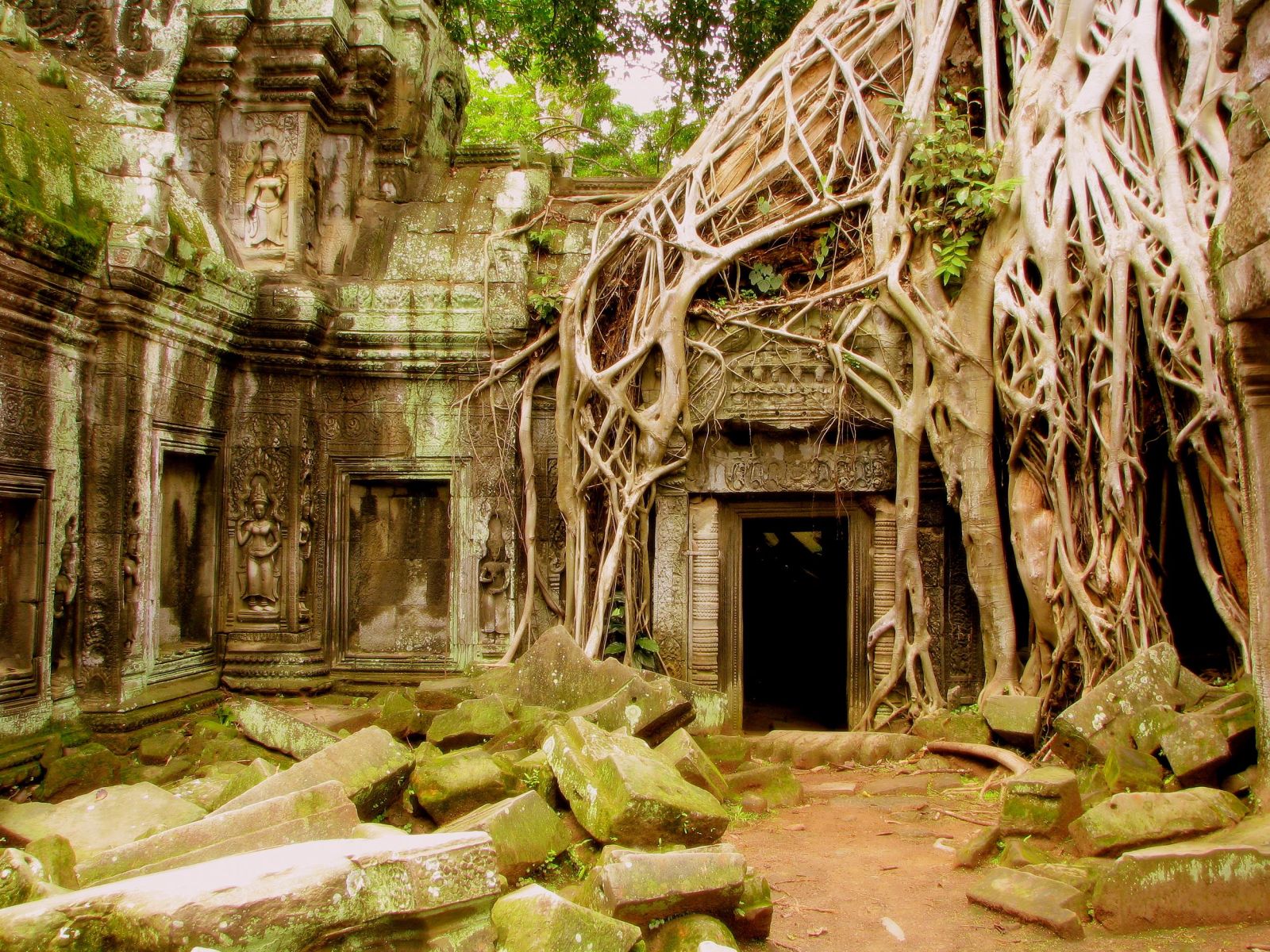
Ta Prohm became world-famous after appearing in Tomb Raider in 2001, and yes, it still lives up to the hype. Massive tree roots snake over walls and doorways, giving the whole place a half-swallowed-by-the-jungle look. It was built in 1186 under Jayavarman VII and remains one of the most atmospheric stops in Angkor.
Ta Keo Temple
Ta Keo is one of the tallest temple-mountains in the area and one of the starkest. Built around the year 1000 under Jayavarman V, it was never fully finished. A long-running story says a lightning strike was taken as a bad omen, and political instability didn’t help. The result is unusual: a huge sandstone temple with much less decoration than you’d expect.
When Is the Best Time for Angkor Wat Sunrise and Sunset?
Sunrise
The most famous sunrise in Cambodia is at Angkor Wat. Aim to arrive around 5:00 AM, or a little earlier in busy season, if you want a decent spot by the reflection pools. It gets crowded fast.
Sunset
For the classic Angkor Wat sunset experience, most people head to Phnom Bakheng or Pre Rup. Both are popular, and both fill up. If sunset Angkor Wat is on your must-do list, go early and be patient. The light is best just before the sun drops, when the stone starts to glow.
Travel Tips for Visiting Angkor Wat
- Dress modestly. This is still an active religious site, not just a photo stop.
- Bring water, sunscreen, and a few snacks. The heat can drain you faster than you think.
- Keep your Angkor Pass with you at all times. Checks are routine.
- Start early. The coolest hours are also the best hours.
Try to avoid peak weekend mornings if you can.
If you only have one day, be realistic. You can see a lot, but it’s tiring. A 3-day pass gives you a much better pace, especially if Angkor Wat sunset and sunrise are both on your list.
For travelers comparing Vietnam vacations packages, adding Siem Reap usually makes the whole trip feel richer. Temple days balance out city time, beach time, and food-focused travel in a really satisfying way.
Why Angkor Wat Is Worth the Trip
Angkor Wat is Cambodia’s defining landmark for a reason. It’s vast, deeply spiritual, visually unforgettable, and still powerful in person in a way photos never quite capture. If you’re planning a Vietnam travel package or a wider Southeast Asia route, Angkor deserves a place on the itinerary.
FAQs
How many days should I spend exploring Angkor Wat?
Most people should give it 2 to 3 days. One day is possible, but you’ll move fast and miss a lot.
What is the best time to visit Angkor Wat?
November through March is usually the best stretch, with drier weather and slightly cooler temperatures.
Can Angkor Wat be visited in one day?
Yes, but it’s a long, hot day. If your schedule allows, the 3-day pass is a much better experience.
Is Angkor Wat worth visiting?
Absolutely. It’s one of the world’s great archaeological and architectural sites, and it easily lives up to its reputation.
Customize This Itinerary
Let our local experts design the perfect itinerary for you. It’s free, personalized, and take less than 24 hours !
 No obligation100% personalizedBest Price Guarantee2M$ Liability Insurance
Follow Us

Subscribe to our newsletter
Most viewed articles
Plan Your Trip
Get a free personalized itinerary
from our local experts.
Your Name
Email Address
Further Comments
No obligation100% personalized