





Planning a vietnam trip? Let us help.
Get personalized travel plan based on your interest, budget and preferred travel dates
Halfway around the world, the United States (the US) and Vietnam have many common and different in lifestyle, tradition and culture. So what to prepare for your travel to Vietnam from the US – Visa, Flight, Money? Things to know for Vietnam tour pack
TABLE OF CONTENTS
1
What This Guide Covers (and Why It Matters)
2
The Vietnam Visa Situation for Americans
Do US Citizens Need a Visa for Vietnam?
When You Might Not Need One
The Visa Types You'll Actually Use
The E-Visa: Your Best Bet
Visa on Arrival — Still Around, but Niche
How to Apply, Step by Step
Mistakes I've Seen People Make
3
Flights from the US to Vietnam — Getting There Without Losing Your Mind
The Airline Reality
Finding Fares That Don't Hurt
Where Should You Land?
What Happens When You Land
4
Money Matters — Currency, Cards, and Not Getting Scammed
The Vietnamese Dong
Should You Bring Dollars?
Getting at Your Money
What a Trip Actually Costs
Scams and Staying Sharp
5
Fitting Vietnam Into Your Bigger Travel Plans
A Classic North-to-South Loop
Beach-Focused Escapes
Regional Combinations
6
Practical Tips Before You Go
7
FAQ
Do US citizens need a visa for Vietnam?
Does a US citizen need a visa for Vietnam if they only have a layover?
What are the Vietnam entry requirements for US citizens?
How much does a trip to Vietnam cost?
What is the Vietnam visa cost for Indian travelers?
Does Vietnam require a visa for US citizens traveling for business?
What's the best way to get a Vietnam visa for a US citizen?
Is it easy to plan a trip to Ho Chi Minh City from the US?
8
Start Planning, Then Go
The first time I landed in Vietnam, I made a rookie mistake. I'd printed my e-visa but folded it into my back pocket, and by the time I reached the immigration counter at Tan Son Nhat, it was a sweaty, crumpled mess. The officer raised an eyebrow, smoothed it out, and stamped me through anyway. Lesson learned. Bring two copies, and keep one flat.
That trip turned into many trips. I've flown into all three of Vietnam's big airports, eaten pho at 6 a.m. on plastic stools, gotten short-changed exactly once, and figured out the rhythm of how money actually works here. If you're an American getting ready for your first vietnam country tour, I want to walk you through the three things that trip people up most: the visa, the flights, and the money. Get these sorted before you leave home and everything else falls into place.
This isn't theory. It's what I wish someone had told me before I went.
What This Guide Covers (and Why It Matters)
Vietnam is roughly 8,000 miles from the US, and the cultural distance can feel just as wide at first. That's part of the fun. But it also means a little homework goes a long way. Visa rules, airline routes, and the currency situation here aren't complicated once you understand them, yet each one has a few quirks that catch unprepared travelers off guard.
I've grouped everything into the three pillars that genuinely affect whether your trip to Vietnam starts smoothly or starts with a headache at the airport. We'll cover who needs a visa and how to get it, how to actually get to Vietnam without paying through the nose, and how to handle cash, cards, and the eye-watering denominations of the Vietnamese Dong. Sprinkled throughout are the small things — the stuff that doesn't make it into official guides but makes a real difference on the ground.
By the end, you'll know enough to book a solid vietnam trip package with confidence, or to wing it independently if that's more your style.
.png)
The Vietnam Visa Situation for Americans
Let's get the big question out of the way, because I get asked it constantly.
Do US Citizens Need a Visa for Vietnam?
Short answer: yes. Do US citizens need a visa for Vietnam if they're coming for tourism, business, or pretty much any other reason? In almost all cases, yes, you do. There's no walk-up-and-stroll-in arrangement for American passport holders the way some countries enjoy. You sort the paperwork before you fly.
I know people search does US citizen need visa for Vietnam hoping the answer has changed. It hasn't, not in any meaningful way for ordinary tourists. The good news is that the process has gotten dramatically easier over the years. When I first went, the system was clunkier. Now it's mostly online and takes a few days.
There are two narrow exceptions worth knowing, and we'll get to those. But for the typical American flying in for a two-week holiday, plan on getting a visa. Full stop.
When You Might Not Need One
Even though the default answer to does Vietnam require a visa for US citizens is yes, a couple of carve-outs exist.
If you have Vietnamese roots or family ties. Americans of Vietnamese origin, or those married to a Vietnamese citizen, can apply for a Certificate of Visa Exemption. It's a genuinely useful document — it lets you come and go without a visa, each visit can stretch to 180 days, and the certificate stays valid for up to five years. You apply through a Vietnamese embassy or consulate and you'll need to prove the family connection with passport copies and supporting paperwork. If this is you, it's absolutely worth setting up.
If you're heading straight to Phu Quoc. This one surprises people. You can land on Phu Quoc Island visa-free for up to 30 days, but only if you fly in directly from another country and stay put on the island. The moment you hop over to the mainland, the exemption evaporates. So it works beautifully for a pure beach holiday, less so if Phu Quoc is just one stop on a bigger loop.
For everyone else, the question do US citizens need visa for Vietnam has the same answer it's had for years. Get the e-visa.
.png)
The Visa Types You'll Actually Use
Vietnam offers a handful of visa categories, but most travelers only need to know about two or three.
The tourist visa (DL) is the one you want for a vacation. It comes in 30-day or 90-day flavors, single or multiple entry, and you can apply for it entirely online. This is the workhorse for leisure travel.
The business visa (DN1, DN2) is for meetings, work with Vietnamese companies, that kind of thing. It usually needs a sponsoring business in Vietnam and can run anywhere from a month to a full year. More paperwork, more hassle, but necessary if you're here on company time.
There are also visas for work, study, journalism, and diplomatic purposes, each with their own document trail and sponsorship requirements. Most readers won't touch these.
.png)
One thing I'll repeat until I'm blue in the face: check your passport. It must be valid for at least six months from the day you enter Vietnam, and you'll want at least one blank page. I've watched a guy at check-in in San Francisco get turned away because his passport expired in four months. Don't be that guy.
The E-Visa: Your Best Bet
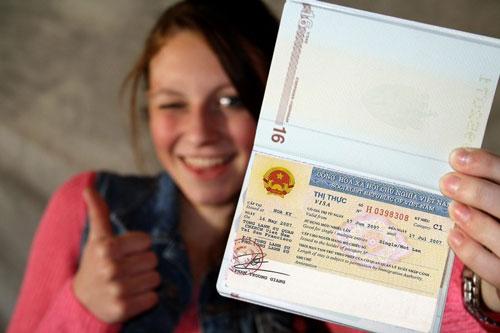
For the vietnam visa for us citizen, the e-visa is the obvious choice for nearly everyone. You apply through Vietnam's official immigration portal, upload a scanned copy of your passport's photo page and a passport-style photo, give them a working email, and pay the fee. Processing usually takes three to five working days.
The current e-visa allows stays of up to 90 days, with single or multiple entry options depending on what you pick. Once it's approved, it lands in your inbox as a PDF. Print it. Print a backup. Bring both. It's accepted at the major airports, land crossings, and seaports across the country.
The standard fee is $25 USD for the single-entry, and it's non-refundable, so triple-check your details before you hit submit.
There are dozens of copycat sites that look official and charge you triple. If a site is plastered with "guaranteed" badges and asks for $80 "expedited" fees, close the tab. The real thing is cheap and government-run.
Visa on Arrival — Still Around, but Niche
The Visa on Arrival (VOA) route is the older method, and it still works, but only if you're flying in. You apply online through an authorized travel agency for an approval letter, then at the airport you hand over that letter, two passport photos, a completed entry form, and your passport, and pay a stamping fee in cash. The stamping fee runs around $25 for single entry, more for multiple.
Honestly? Since the e-visa got robust, I rarely bother recommending VOA to first-timers. It means standing in an extra queue at the airport after a 20-hour journey when you'd rather just walk through. But it's handy if you booked last-minute and the e-visa processing window feels tight. Just remember VOA only works for air arrivals, never at land or sea borders.
How to Apply, Step by Step
- For the e-visa, here's the flow I follow:
- Go to the official immigration portal — and only the official one.
- Get your documents ready: a passport valid six-plus months with blank pages, a white-background photo with no glasses, and a clean scan of your bio page.
- Fill in the form carefully. Your name, passport number, entry and exit points, and dates all need to match your passport exactly.
- Pay the $25 with an international card.
- Wait three to five business days. Pad that out around Tet (Vietnamese New Year) and other holidays when offices slow down.
- Download the PDF, print it, and carry it.
If you'd rather go the traditional route, or you need a visa type that isn't available online, the Vietnamese Embassy or Consulate in the US handles paper applications by mail or in person. That takes longer, usually five to seven business days, and costs more, somewhere in the $80 to $150 range depending on the visa. For long-term business stays or unusual situations, the embassy gives you more personal hand-holding.
Whatever method you pick, apply at least a week or two before you fly. I aim for three weeks myself, because life happens and you don't want a visa delay eating into a non-refundable flight.
Mistakes I've Seen People Make
A few errors come up again and again, and all of them are avoidable.
Typos. A single wrong digit in your passport number or a misspelled name can get an e-visa kicked back or, worse, cause grief at immigration. Read every field twice.
Cutting the passport validity too close. Six months from your entry date, no exceptions. If yours is borderline, renew before you even start the visa application.
Picking the wrong visa. Applying for a tourist visa while planning to attend business meetings isn't allowed, and it can land you in an awkward spot at the border. Match the visa to the actual reason you're traveling.
For Indian readers who stumble across this looking up the Vietnam visa cost for Indian travelers — the systems are similar and Indians also use the e-visa, with fees in roughly the same ballpark as Americans, though I'd always check the current rate on the official portal since it's set per nationality and updated periodically.
Flights from the US to Vietnam — Getting There Without Losing Your Mind
This is the long-haul part, and there's no sugarcoating it. Vietnam is far.
The Airline Reality
Here's something to set expectations: there are currently no nonstop flights from the US to Vietnam. Every route involves at least one connection. That sounds rough, but a smart connection can actually break up the journey nicely, and some of the transit airports are genuinely pleasant places to stretch your legs.
.png)
Most people fly out of the big gateways — New York (JFK), Los Angeles (LAX), or San Francisco (SFO) — and connect through an Asian or Middle Eastern hub. From the East Coast, you'll often route through Tokyo, Seoul, Doha, or Taipei. From LA, common layovers are Hong Kong, Incheon, or Narita. Out of San Francisco, you'll find tidy one-stop options through Seoul, Taipei, or Singapore.
The airlines I'd point you toward:
- Vietnam Airlines — the national carrier, with warm service and Vietnamese food on board that'll get you in the mood before you land.
- Korean Air and Asiana — both run quick, efficient connections through Seoul's Incheon, which is a fantastic airport to be stuck in.
- Japan Airlines and ANA — punctual, polished, smooth connections through Tokyo.
- Qatar Airways and Emirates — longer routes via Doha or Dubai, but the cabins are plush and the fares are often surprisingly competitive.
- EVA Air and China Airlines — Taiwan-based, reliable, and usually easy on the wallet through Taipei.
Total travel time can push past 20 hours with layovers, so the airline you choose genuinely affects how human you feel when you arrive. I'll happily pay a bit more for a connection that doesn't have me sprinting across a terminal at 2 a.m.
Finding Fares That Don't Hurt
A big chunk of your vietnam trip cost is the flight, so this is where smart planning pays off most.
Book two to four months out for the best balance of price and availability. For summer or major holidays, stretch that to four to six months. The shoulder seasons — roughly April to June and again September to November — tend to have softer fares and thinner crowds, which is a double win.
.png)
For tools, I bounce between Skyscanner for its flexible-date view, Google Flights for tracking price trends, Momondo for digging up odd-routing bargains, and KAYAK for its fare forecasts. In the region, Traveloka is worth a look too. I set price alerts on a couple of these and let them do the watching for me.
Two more tricks. Flying midweek, especially Tuesday or Wednesday, often shaves real money off the fare. And don't fear a layover — some carriers offer free or cheap stopover programs, so you can spend a day in Seoul or Tokyo on the way over. I once turned a Taipei layover into a full day of night-market eating. Best "free" side trip I've had.
Where Should You Land?
Vietnam has three main international gateways, and picking the right one saves you backtracking.
Hanoi (Noi Bai – HAN) is your entry to the north. If you're after the capital, Ha Long Bay, Ninh Binh, or the mountains of Sapa, fly here. It's modern and well-connected to East Asia and Europe.
Ho Chi Minh City (Tan Son Nhat – SGN) is the busiest airport in the country and the gateway to the south. Land here for Ho Chi Minh City itself, the Mekong Delta, and beach spots like Mui Ne and Vung Tau. It has the most frequent international arrivals, so connections are easiest. A trip to Ho Chi Minh City almost always starts at this airport, and the energy hits you the moment you walk out — it's a city that doesn't sit still.
Da Nang (DAD) is the smart choice for central Vietnam. From here you're a short hop from Hoi An, the imperial city of Hue, and the Marble Mountains. It gets fewer international flights than the other two but is well served by domestic routes and some regional international links from Seoul, Bangkok, and Singapore.
.png)
A common itinerary trick: fly into one end of the country and out the other. Into Hanoi, out of Saigon (or vice versa), with the middle covered by domestic flights or trains. Saves you a long, dull backtrack.
What Happens When You Land
Arrival at Vietnam's main airports is more streamlined than you might fear.
With an e-visa, you hand the printed copy, your passport, and any required form to the immigration officer, they check it, stamp it, and you're in. If you went the VOA route, you peel off to the VOA counter first to get the visa stamped (cash for the fee, USD accepted) before joining the immigration line.
Past immigration, you grab your bags — carts are free — and clear customs, which for most travelers is a quick wave-through. Don't bring drones without permission or huge wads of cash and you'll be fine.
.png)
For getting into town, use the official taxi counters inside the terminal and stick to reputable names like Mai Linh or Vinasun. Better yet, use Grab or Be, the ride-hailing apps, which give you a fixed price up front and remove the haggling entirely. Pre-booked hotel transfers are worth it if you're landing late or hauling a lot of luggage. Public buses exist in Hanoi and Saigon and they're cheap, but with bags and jet lag they're more trouble than they're worth your first time.
The airports have free Wi-Fi, SIM card stalls, money exchange, and ATMs right in arrivals, so you can sort connectivity and a bit of cash before you even step outside.
Money Matters — Currency, Cards, and Not Getting Scammed
Vietnam runs largely on cash, and the currency itself takes some getting used to. Let me save you the confusion I went through.
The Vietnamese Dong
The official currency is the Vietnamese Dong (VND). Coins basically don't circulate anymore, so you'll deal in banknotes running from 1,000 up to 500,000 VND. Here's the catch — several of them look maddeningly alike. The 10,000 and 100,000 notes in particular trip people up because they're similar colors. Slow down when you pay or take change.
.png)
As of early 2025, a dollar gets you somewhere around 24,000 to 26,000 VND, though it drifts daily. The big numbers make everything sound expensive until your brain recalibrates. A bowl of something delicious at a local spot might be 40,000 to 80,000 VND — call it a buck-fifty to three-fifty. A proper Vietnamese coffee, thick and sweet, runs under 30,000 VND. You'll quickly stop converting in your head and just enjoy how far your money goes.
Should You Bring Dollars?
Yes, carry some US dollars, mainly as a buffer for your first taxi, a SIM card, or an emergency. But don't expect to spend them — local markets and small shops want Dong, not greenbacks. You'll convert.
For exchange, your best rates come from banks like Vietcombank, BIDV, or ACB. Reputable gold shops in the cities often give competitive rates too, but only use licensed, well-known ones. The exchange counters at the airport are convenient but stingy on rates, so I only swap enough there to cover the ride into town and handle the rest in the city.
.png)
Never change money with someone on the street. The rate looks great until you're holding counterfeit notes or you've been short-counted. Always count what you receive on the spot and ask for a receipt where you can.
Getting at Your Money
A combination approach works best: ATMs for cash, cards for big-ticket stuff, and cash for everything small and everyday.
ATMs are everywhere in Hanoi, Ho Chi Minh City, and Da Nang, and most take international Visa and MasterCard. Withdrawal limits typically sit between 2,000,000 and 5,000,000 VND per transaction — roughly $80 to $200. Local banks tack on a fee of around 30,000 to 50,000 VND per pull, and your home bank may add its own foreign-transaction charge, so withdrawing larger amounts less often makes sense. Use machines inside bank branches or malls rather than lonely ones on the street to dodge skimmers.
Cards are increasingly welcome in cities — hotels, nicer restaurants, supermarkets, malls, and ride apps when you link them. Visa and MasterCard lead; Amex is patchy. Tell your bank you're traveling so they don't freeze your card the first time it pings in Hanoi. But keep cash on you, because street food, market stalls, and most taxis still don't do plastic.
Mobile wallets like Momo, ZaloPay, VNPay, and ShopeePay rule among locals, but they generally need a Vietnamese bank account, so they're tricky for tourists. Apple Pay and Google Pay work at some international chains and modern spots. For a longer stay, a local SIM with wallet features is worth setting up — ask your hotel for help.
.png)
What a Trip Actually Costs
Vietnam is one of the best-value destinations in Southeast Asia, which is a big reason a vietnam travel package here stretches so far compared to other parts of the world. Your daily spend depends entirely on your style.
- Budget travelers ($25–$40/day): hostels or guesthouses, street food, local buses or Grab Bike, free and cheap sights.
- Mid-range ($50–$100/day): comfortable hotels, sit-down restaurants, Grab cars and the occasional domestic flight, a mix of tours and entry fees.
- Luxury ($120–$300+/day): high-end hotels and resorts, fine dining, private transfers, tailored tours.
Breaking it down further: dorm beds run $5 to $15 a night, budget hotels $15 to $35, mid-range places $40 to $80, and luxury resorts from $100 well past $300 in the popular spots. Street food like pho or banh mi is $1 to $3 and often better than the sit-down version. Local restaurant meals land at $3 to $7; Western or upscale dining $10 to $25 and up.
Getting around is cheap. Public buses are $0.30 to $1, a short Grab Bike ride $1 to $3, domestic flights $30 to $80 one way, and overnight trains $20 to $50 depending on class. The trains are a genuinely lovely way to cross the country, by the way — I'd take the sleeper over a budget flight just for the experience.
.png)
Attractions are gentle on the wallet too. Museums are usually $1 to $3, guided walking or cultural tours start around $15, and bigger experiences like a Ha Long Bay cruise run $30 to $100+ depending on what's included.
This is the kind of detail that makes building a vietnam tour package so satisfying — your dollar simply does more here, and a well-planned vietnam travel tour packages itinerary can cover a lot of ground without blowing the budget.
To save where you can: eat where the locals eat, lean on Grab and public transport, travel in the rainy off-season (May to September) for lower prices, book domestic flights and trains early, haggle politely in markets, and skip airport currency exchange in favor of city banks.
Scams and Staying Sharp
Vietnam is generally safe, but petty money tricks happen in touristy zones. A few habits keep you out of trouble.
Check prices before you buy, especially where nothing's labeled. Ask your hotel what something should cost if you're unsure. Use metered taxis from Mai Linh or Vinasun, or Grab for locked-in fares. Count your change every time — the large-bill-becomes-small-bill switch is a classic, and those lookalike 10,000 and 100,000 notes are the usual culprits.
.png)
Counterfeit bills aren't common but stay alert with the big 200,000 and 500,000 notes. Real Vietnamese money is polymer plastic — it feels slick, has a clear window, embedded security threads, watermarks, and color-shifting ink. Hold a suspect note up to the light and compare it to one you trust.
For carrying cash, a money belt or neck pouch helps in crowds. Don't withdraw huge sums at once — pull smaller amounts as you go. Split your money so you're not keeping everything in one place, and stash backup in the hotel safe. And keep small bills handy, because that street vendor will not have change for a 500,000 note.
Fitting Vietnam Into Your Bigger Travel Plans
Once the logistics are handled, the fun part begins: shaping the actual route. Vietnam rewards a thoughtfully built vietnam vacations packages approach because the country is long and varied, and the regions feel like different worlds.
.png)
A Classic North-to-South Loop
My favorite structure for a first visit is the full sweep. Start in Hanoi for a few days of old-quarter chaos, lake-side mornings, and the best street coffee of your life. Add a couple of nights on a Ha Long Bay cruise, then loop through Ninh Binh for the karst scenery that looks like Ha Long on land. If you've got time and don't mind the cold-season trek, Sapa in the far north is worth the detour for the rice terraces.
Fly or train down to the center for Hue and Hoi An — imperial history and lantern-lit charm in one easy pairing, with Da Nang's beaches as the relaxing buffer between sightseeing days. Finish in Ho Chi Minh City and the Mekong Delta for southern energy, history, and slow boat rides through the waterways.
(1).png)
This kind of end-to-end journey is exactly what a well-designed vietnam package travel itinerary is built around, and flying into Hanoi and out of Saigon means you never waste a day doubling back.
Beach-Focused Escapes
If you'd rather slow down, build around Phu Quoc. Remember that visa-free perk — fly in directly and stay on the island and you can skip the visa entirely for up to 30 days. It's a strong option for honeymooners or anyone who wants sand and seafood over a packed sightseeing schedule.
Regional Combinations
Vietnam pairs naturally with its neighbors. A lot of travelers tack on Cambodia for Angkor Wat in Siem Reap, or extend into Laos for a quieter, more laid-back finish to a busy Vietnam route. The Mekong links these countries both geographically and culturally, which is why so many vietnam tourism packages offer multi-country versions. If you've come all this way from the US, stretching the trip to take in a second country often makes the long-haul flight feel more worth it.
.png)
This is where working with a good local operator earns its keep. They handle the domestic flights, the cruise bookings, the transfers between regions, and the timing — all the connective tissue that's a pain to coordinate yourself across a country this size. A tailored vietnam tour package built by people who actually live there usually costs less than you'd expect and removes the logistical guesswork.
Practical Tips Before You Go
.png)
A few odds and ends that don't fit neatly elsewhere but matter on the ground.
Best time to visit depends on where you're headed, because Vietnam's weather splits by region. The north (Hanoi, Sapa, Ha Long) is best October through April, cooler and drier. The center (Hue, Da Nang, Hoi An) shines February to August, though watch for typhoons and heavy rain September to November. The south (Ho Chi Minh City, the Mekong) is at its best November to April, with a rainy-but-brief-shower season May to October.
Travel insurance is non-negotiable for me. Foreigner healthcare at international hospitals is pricey and often demands upfront payment, and if you plan on motorbiking, hiking, or boat trips, you want coverage for injury and evacuation. Get a policy that includes medical, trip interruption, and personal liability.
Packing for the tropics: lightweight breathable clothes, long sleeves and pants for temples and sun, a light jacket if you're heading north in winter. Comfortable walking shoes, sunscreen, insect repellent, a reusable water bottle, and a universal adapter (Vietnam runs 220V, plug types A, C, and D). Bring your prescription meds and any familiar toiletries, since US brands can be hard to find.
Health basics: check your routine vaccinations are current, and the CDC recommends hepatitis A and typhoid for travelers eating local food or visiting rural areas. Don't drink the tap water — bottled with an intact seal only, even for brushing teeth, and skip ice in remote spots unless you're sure it's purified. For food, the busy stalls packed with locals are your safest and tastiest bet.
A little Vietnamese goes a long way. Learn "xin chào" (hello), "cảm ơn" (thank you), and "ngon quá!" (delicious!). Locals light up when you try, even when you butcher the tones. I still remember a noodle vendor in Hanoi laughing and giving me extra herbs because I attempted my terrible "cảm ơn."
FAQ
Do US citizens need a visa for Vietnam?
Yes. For tourism, business, or most other purposes, Americans need a visa arranged before arrival. The simplest route is the e-visa, applied for online through the official immigration portal. The only real exceptions are travelers with a Certificate of Visa Exemption (for those with Vietnamese family ties) and visitors flying directly to Phu Quoc Island for stays under 30 days.
Does a US citizen need a visa for Vietnam if they only have a layover?
If you're just transiting through a Vietnamese airport without clearing immigration, you generally don't need a visa. But the moment you want to leave the airport and enter the country — even for a short stopover — you'll need a valid visa like everyone else. When in doubt, get the e-visa; it's cheap and saves stress.
What are the Vietnam entry requirements for US citizens?
You'll need a passport valid for at least six months beyond your entry date with a blank page, an approved visa (e-visa printout or VOA approval letter), and any required entry forms. It's smart to also carry proof of onward travel, hotel bookings, and travel insurance, though these aren't always checked.
How much does a trip to Vietnam cost?
It varies hugely by style. Budget travelers can get by on $25 to $40 a day, mid-range travelers on $50 to $100, and luxury travelers $120 to $300 and up. On top of daily spending, factor in the long-haul flight from the US, which fluctuates with season and how early you book. Overall, Vietnam delivers excellent value for money compared to most destinations.
What is the Vietnam visa cost for Indian travelers?
Indian citizens also use the e-visa system, and the structure is similar to what Americans pay, with fees set per nationality. Since rates are updated periodically, the safest move is to check the current fee directly on the official Vietnam immigration portal before applying rather than relying on third-party sites.
Does Vietnam require a visa for US citizens traveling for business?
Yes, and you'll want the correct visa type — a business visa (DN1 or DN2) rather than a tourist one. Business visas usually require sponsorship from a Vietnamese company and more documentation. Entering on a tourist visa while doing business work isn't permitted and can cause problems at the border.
What's the best way to get a Vietnam visa for a US citizen?
The e-visa is the easiest and cheapest option for most travelers. Apply online through the official government portal, pay the $25 fee, and wait three to five business days for the PDF approval. Apply at least a week or two before you fly to leave room for any delays, and always use the official site, not lookalike third-party services.
Is it easy to plan a trip to Ho Chi Minh City from the US?
Yes, though it'll involve a connection since there are no nonstop flights. You'll fly into Tan Son Nhat International Airport, the busiest in Vietnam, usually via an Asian hub. From there, Grab and reputable taxis get you into the city easily. Ho Chi Minh City makes a natural starting or ending point for a southern-focused itinerary.
Start Planning, Then Go
Vietnam isn't a place you tiptoe into — it grabs you. The motorbike rivers, the smell of charcoal and lemongrass on every corner, the way a stranger insists you sit and share their tea. But all of that lands so much better when the boring stuff is already handled. Sort your visa early, book a flight with a sane connection, and get your head around the Dong before you arrive, and you'll spend your first day actually exploring instead of untangling logistics.
That's the whole point of this guide. The visa, the flight, the money — three things, each simple once you know the angles. Handle them now and you free yourself up for everything that makes a vietnam country tour worth the long haul: the food, the landscapes, the people, the small unplanned moments you'll be telling stories about for years.
Whether you build your own route or hand it to local experts who do this every day, do yourself a favor and start the planning now. Vietnam's waiting, and trust me — once you've been, you'll already be plotting the next trip back.
Customize This Itinerary
Let our local experts design the perfect itinerary for you. It’s free, personalized, and take less than 24 hours !
 No obligation100% personalizedBest Price Guarantee2M$ Liability Insurance
Follow Us

Subscribe to our newsletter
Most viewed articles
Plan Your Trip
Get a free personalized itinerary
from our local experts.
Your Name
Email Address
Further Comments
No obligation100% personalized