

Planning a myanmar trip? Let us help.
Get personalized travel plan based on your interest, budget and preferred travel dates
Updated list of unmissable Myanmar November festivals to plan your trip: Balloon festival, Tazaugdine Festival of light, Shwezigon pagoda festival, etc. Read more here.
TABLE OF CONTENTS
1
Why November Turns Myanmar Into One Long Celebration
A Culture Built Around the Full Moon
What are the main traditions of the Myanmar New Year (Thingyan)?
2
Top Myanmar Festivals to Experience in November
1. Tazaungdaing — the Festival of Lights
Taunggyi's Hot-Air Balloon Festival
2. The Robe Weaving Ceremony at Shwedagon Pagoda
3. Sarsodaw Day — Myanmar Writers' Day
3
How do people in Myanmar prepare for the New Year and water festival?
4
The Smaller Celebrations Most Travelers Miss
Regional festivals you might just stumble into
Why the small stuff often beats the headliners
5
Location and How to Get Around During Festival Season
6
Are there any reliable sources for Myanmar news and marine weather?
7
Best Time to Visit — Timing It Right
8
What is the ideal month to visit Myanmar for good weather?
9
What to Expect When You're Actually There
10
Travel Tips for the Festivals
What to wear and pack
Etiquette that actually matters
Staying safe and comfortable in the crush
11
How to Build These Festivals Into Your Trip
A festival-focused Myanmar route
Pairing Myanmar with the wider region
12
FAQ — Myanmar Festivals in November
Are Myanmar's festivals suitable for families with children?
Do I need tickets for any of the November festivals?
Are these festivals celebrated all over the country?
When exactly is the balloon festival in Taunggyi?
What should I wear to the festivals?
How far ahead should I plan a November trip to Myanmar?
Can I combine Myanmar's festivals with other countries in the region?
Which festival should I prioritize if I only have a few days?
13
Go While the Sky Is Full of Fire
The first time I watched a paper balloon the size of a small house rise into the black Shan sky, dragging a tail of sparks behind it, I forgot to breathe for a second. Everyone around me tilted their heads back at the same time. Thousands of people, all of us silent, then all of us cheering. That's the thing about a myanmar festival in November — it grabs you by the collar and won't let go until dawn.
I've been lucky enough to spend a good chunk of a November wandering this country, and if you're the kind of traveler who plans trips around moments rather than checklists, this is the month. The rains have mostly packed up. The air turns crisp at night. And the whole place seems to celebrate something almost every week. Below is my honest, boots-on-the-ground rundown of the festivals in myanmar worth building an itinerary around, plus the practical stuff nobody tells you until you're standing there confused and shoeless outside a pagoda.
Why November Turns Myanmar Into One Long Celebration
Let me set the scene properly. November falls right at the tail end of the monsoon, when the country exhales after months of heavy sky. The paddy fields glow that impossible electric green. Farmers are bringing in the harvest. And because so much of Myanmar's life runs on the Buddhist lunar calendar, this is when several of the biggest myanmar festivals land, one after another.
The star of the month is Tazaungmone, a lunar month whose full moon triggers a cascade of celebrations. Lights everywhere. Weaving contests that run all night. Balloons, fireworks, monks receiving new robes at first light. It's devotional and rowdy at the same time, which sounds contradictory until you're in it.
.png)
Here's what makes November genuinely worth the flight:
- The weather actually cooperates. Days are warm and dry, nights are cool enough for a light jacket, and the humidity that flattens you in the rainy season has lifted. For temple-hopping around Bagan or trekking near Inle Lake, you couldn't ask for better.
- The crowds are thinner than you'd think. Myanmar has gotten more popular over the years, but November still sits in that sweet shoulder-season pocket. You get the festivals without the elbow-to-elbow chaos of peak dead-of-winter tourism.
- The culture is right out in the open. You don't have to hunt for authenticity here. It spills into the streets, the markets, the pagoda courtyards. Everyone's involved.
I'll be honest — part of what pulled me toward Myanmar in the first place was reading a festival of myanmar described almost as an afterthought in someone's blog, and thinking, wait, why is nobody making a bigger deal of this? So here I am, making a bigger deal of it.
A Culture Built Around the Full Moon
Almost every important celebration here traces back to Buddhism, which shapes daily life in a way that's hard to overstate. Many of these traditional festivals in myanmar cluster around specific dates in the Buddhist calendar, and the full moon of Tazaungmone is the big one. Expect thousands of oil lamps flickering along temple walls, offerings of flowers and fruit stacked at shrines, families kneeling in quiet rows.
What struck me wasn't the scale so much as the sincerity. This isn't a performance staged for tourists with a camera. People are genuinely doing this for themselves, for merit, for their ancestors. You're a guest at something real, and you feel that responsibility the moment you step into a temple courtyard.
What are the main traditions of the Myanmar New Year (Thingyan)?
While Thingyan is Myanmar's best-known New Year celebration and takes place in April, its traditions help explain the country's broader festival culture. The celebration combines water, spiritual purification, community gatherings, and acts of merit, with families and communities coming together to welcome the New Year.
.png)
Top Myanmar Festivals to Experience in November
There's a long myanmar festivals list you could chase across the country, but three anchor the month. If you plan around these, everything else slots in around the edges.
1. Tazaungdaing — the Festival of Lights
If you only catch one celebration all month, make it this. Tazaungdaing, the Festival of Lights, lands on the full moon of Tazaungmone and it's celebrated everywhere — from the smallest village to the golden heart of Yangon.
The meaning behind it is lovely once you know it. It marks the end of the Buddhist Lent, the period when, by tradition, the Buddha returned to the human world. So the whole country lights up to welcome him back. Homes glow with candles set along windowsills and doorframes. Streets shimmer with lanterns. And in temple compounds, teams gather for the weaving competitions that produce those saffron robes for the monks.
I spent one of these evenings just walking a residential neighborhood, no plan at all, watching families set out little rows of lights on their steps. Kids ran around with sparklers. Somebody handed me a paper lantern without a word. That kind of thing sticks with you far longer than any monument.
Taunggyi's Hot-Air Balloon Festival
The wildest, loudest, most unforgettable version of Tazaungdaing happens in Taunggyi, the capital of Shan State. This is the balloon festival I opened with, and photos genuinely don't prepare you.
.png)
These aren't dainty little sky lanterns. Some of these hot-air balloons stretch up to six meters tall, hand-built over weeks by competing teams, decorated with elaborate patterns and hung with hundreds of tiny lights. During the day they float up in animal shapes — pigs, elephants, birds. At night things get dramatic. The balloons carry frames packed with fireworks that ignite mid-air, and yes, it's a little dangerous, and yes, that's part of the electricity of the crowd.
A few honest tips from someone who was there:
- Get there early and stake out a spot. The good viewing areas fill up fast, and once the night launches begin you won't want to be pushing through crowds.
- Watch your position relative to the wind. Balloons occasionally misbehave. Locals have a sixth sense for when to step back — follow their lead.
- Bring earplugs if you're sensitive to noise. The fireworks are constant and close. I loved it, but my ears were ringing by midnight.
The whole affair is one of the famous festivals in myanmar for good reason. It's part county fair, part fire spectacle, part all-night party, and it feels utterly unlike anything I've seen elsewhere in Southeast Asia.
2. The Robe Weaving Ceremony at Shwedagon Pagoda
This one runs quieter and slower, and I found it just as moving in a completely different register. The Robe Weaving Ceremony is woven right into Tazaungdaing (pun intended, sorry), and it commemorates the very first set of monastic robes that the Buddha's followers wove and offered to him.
.png)
The tradition is called Matho Thingan, and the drama is in the deadline. Teams of women sit at their looms and race through the entire night, working by lamplight, to produce the most beautiful saffron robes they can. There's a genuine competitive edge to it — this is a contest — but also a devotional hush. The finished robes get presented to the monks at dawn on the full moon.
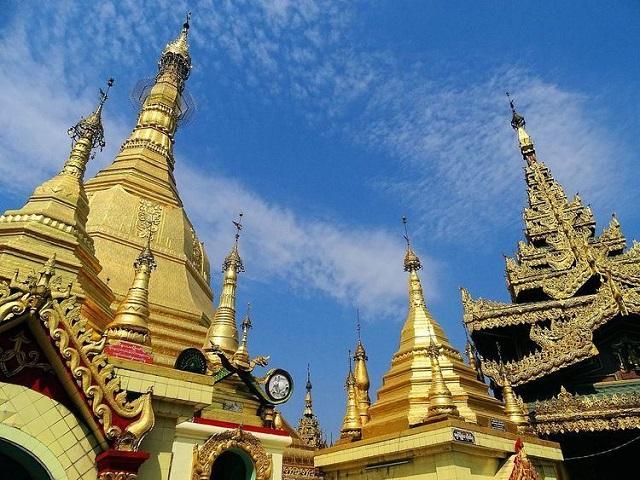
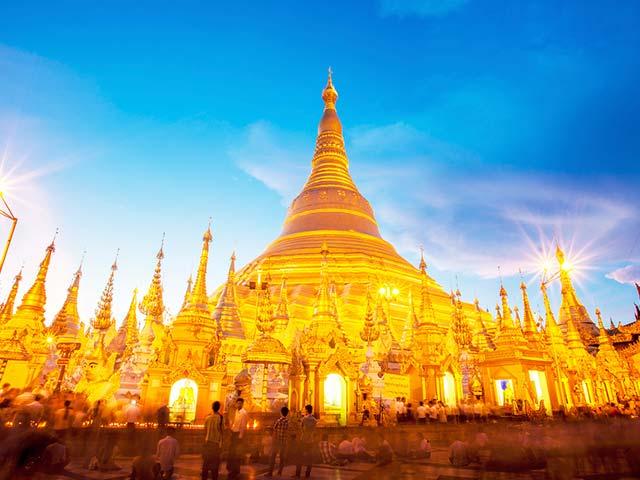
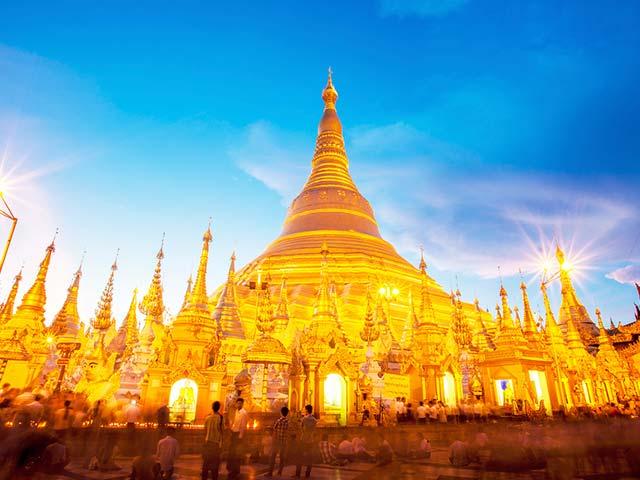
I watched part of this at Shwedagon Pagoda in Yangon, which is the most prominent place to see it, and honestly the most spectacular setting imaginable. The great golden stupa loomed above, the looms clattered below, and the whole thing carried on hour after hour while onlookers drifted in and out.
If you want to see it properly:
- Arrive in the evening to watch the weaving begin, then decide whether you've got the stamina to stay for the dawn presentation. It's worth it if you can manage it.
- Dress conservatively — Shwedagon is deeply sacred, and this is one of its holiest nights.
- Move slowly and keep your voice down near the weavers. They're concentrating hard, and you're a visitor to their vigil.
There aren't many places where you can watch a centuries-old craft performed live, at speed, under a monument like that. It's the kind of scene that makes a holidays to myanmar trip feel like something more than sightseeing.
3. Sarsodaw Day — Myanmar Writers' Day
Now here's one I'd never have known to look for, and I'm so glad I stumbled into it. Sarsodaw Day, or Myanmar Writers' Day, also falls on the full moon of Tazaungmone, and it's a national holiday devoted entirely to the country's literary heritage.
.png)
Think about that for a second. A whole public holiday for writers, poets, and thinkers. Book festivals pop up. Public readings draw crowds. New works get launched. Authors are honored the way footballers get honored elsewhere.
I wandered into a book fair almost by accident, tables piled high with paperbacks, older gentlemen in longyis debating poetry with total conviction, students clutching stacks of new titles. There were traditional dances and theatrical performances too, and a real warmth in the air — a country that clearly loves its own storytellers.
It won't dominate your camera roll the way the balloons will, but it rounds out the picture. Not every festival in myanmar is about fire and spectacle. Some are about ideas, and this is one of the quiet pleasures on any myanmar festival name list worth its salt.
How do people in Myanmar prepare for the New Year and water festival?
Preparations for Thingyan are strongly community-focused. People typically return to their hometowns, prepare traditional foods, spend time with family, and get ready for several days of water-filled celebrations. The festival usually takes place over four to five days in mid-April, creating a very different atmosphere from the lanterns and balloon celebrations that characterize Myanmar's November festival season.
.png)
The Smaller Celebrations Most Travelers Miss
Here's where I'd nudge you off the well-worn path. Beyond the marquee events, November scatters dozens of little local celebrations across towns and villages, and these gave me some of my favorite memories of the whole trip.
Regional festivals you might just stumble into
Travel through Myanmar's regions in November and you'll keep bumping into festivals that belong to one particular town or one particular pagoda. Some celebrate the harvest. Some honor a local guardian spirit or deity. Some mark a specific religious rite that means everything to that community and nothing to the village down the road.
I remember pulling over on a rural road because there was clearly something happening — drums, a crowd, a procession of ox carts. Nobody spoke much English, but somebody pressed a paper cup of tea into my hands and pointed me toward a bench. I never did figure out exactly what we were celebrating, and it didn't matter.
Why the small stuff often beats the headliners
Don't get me wrong, the Taunggyi balloons are unbeatable for pure jaw-drop. But the tiny village festivals let you actually meet people. You're not one of ten thousand spectators; you're the curious stranger everyone wants to feed. You watch traditions that have no tourist audience at all, because they were never meant to have one.
If your itinerary has any flexibility, leave room for the unplanned. Ask your driver or guide what's happening locally on the day. The best of these myanmar festivals rarely appear in any guidebook, and finding one yourself feels like a small victory.
Location and How to Get Around During Festival Season
Getting to the festivals takes a little planning, since the big ones sit in different corners of the country. Here's roughly how the geography works.
Yangon is your main gateway. Most international flights land here, and it's where you'll find Shwedagon Pagoda for the Robe Weaving Ceremony. It's a big, sprawling, sweaty, wonderful city, and I'd give it at least a couple of days.
.jpg)
Taunggyi and the balloon festival sit up in Shan State, in the eastern hills. The usual approach is to fly into Heho airport — the gateway for the whole Inle Lake region — and then drive up to Taunggyi, which is a couple of hours away depending on traffic and road conditions. Domestic flights are the sane way to cover Myanmar's long distances; the roads are scenic but slow.
Bagan, with its thousand-plus temples and its own pagoda festivals, connects by short domestic flight or by long overnight bus from Yangon or Mandalay. If you're combining balloon-viewing with temple-hopping, Bagan slots in naturally between Yangon and the Shan hills.
A few things I learned the hard way about moving around in November:
- Book domestic flights early. Seats vanish during festival season, and prices climb. This is not the month to wing it.
- Hire a private driver for the festival days themselves. In crowded spots like Taunggyi, trying to self-navigate a packed festival town at night is a headache. A local driver who knows where to drop you and where to park is worth every kyat.
- Build in buffer time. Festival traffic is real. Roads clog, parking overflows, and the last thing you want is to miss the night balloon launches because you underestimated the crush.
Are there any reliable sources for Myanmar news and marine weather?
Before traveling between festival destinations, it is worth checking reliable Myanmar news updates and marine weather information, particularly if your itinerary includes coastal areas or boat journeys. Conditions can change quickly, so checking current local and international sources before setting out can help you make better decisions about transportation and outdoor activities.
Best Time to Visit — Timing It Right
November is the answer, but the trick is timing it around that full moon of Tazaungmone, since the biggest festivals all pin to it. The exact date shifts year to year because it follows the lunar calendar, so the first thing to do when you start planning is pin down that year's full moon date. Everything else orbits around it.
.png)
Weather-wise, you're catching Myanmar at its most pleasant. The wet season has wound down, the landscape is still lush from the rains, and the punishing heat of March and April is a long way off. Mornings can be genuinely cool in the hills — I was grateful for a fleece at dawn near Inle. Days are bright and dry, ideal for long hours outdoors.
If you can, arrive a few days before the full moon. It gives you time to shake off the jet lag, get your bearings in Yangon, and reach the balloon festival without a frantic dash. Then you've got the rest of the month to explore at a gentler pace while the festival buzz lingers.
What is the ideal month to visit Myanmar for good weather?
If you're wondering about the ideal time to visit Myanmar for good weather, November through February is generally considered one of the most comfortable periods. These months fall within the country's dry season, bringing sunnier skies, lower humidity, and cooler temperatures that make sightseeing, temple visits, and outdoor activities more enjoyable. November is particularly appealing for travelers who also want to experience Myanmar's major festivals.
What to Expect When You're Actually There
Let me manage expectations, because Myanmar's festivals are joyful but they're not sanitized.
The big ones are crowded. Really crowded. Taunggyi during the balloon nights packs in an enormous throng, and it can feel overwhelming if you're not ready for it. There's noise, smoke, the smell of grilled street food, the crackle of fireworks, vendors calling out, kids weaving through legs. It's sensory overload in the best way, but pace yourself.
The devotional side runs alongside all of it. At Shwedagon and other pagodas, you'll find pockets of absolute stillness a stone's throw from the party — people praying, lighting lamps, kneeling in meditation. That contrast is one of the things I found most beautiful. Sacred and celebratory, side by side, no contradiction felt.
Food-wise, festival season is a feast. Street stalls appear everywhere selling Shan noodles, skewers, fritters, sticky rice sweets, and endless cups of tea. I ate spectacularly well and spent almost nothing. Come hungry.
And expect to be included. Time and again, strangers pulled me into their moment — offered me a seat, a snack, a spot at the front. The traditional festivals in myanmar aren't spectator sports so much as communal ones, and people genuinely want you to enjoy them.
Travel Tips for the Festivals
I made plenty of small mistakes so you don't have to. Here's the practical stuff.
What to wear and pack
Modesty matters here, especially at religious sites, and festivals almost always center on temples.
- Wear long trousers or a skirt that covers the knees. A longyi — the local wrap — is comfortable, cheap to buy locally, and earns you approving nods.
- Keep shoulders and upper arms covered. Toss a light scarf or shawl in your bag for extra coverage when you need it.
- Skip anything tight or revealing. You'll feel out of place and it reads as disrespectful.
For your feet, go with shoes you can slip on and off in a second, because you'll be removing them constantly at pagoda entrances. I basically lived in a pair of easy sandals the whole trip.
Other things I was glad to have:
- A refillable water bottle. Festival crowds are dehydrating work.
- Sun protection — hat, sunglasses, sunscreen. The dry-season sun is stronger than it feels.
- Plenty of small cash. Card acceptance is patchy, and you'll want change for offerings, snacks, and donations.
- A power bank. Your phone battery dies fast when you're filming balloons all night.
- Basic meds and a small first-aid kit. Pharmacies aren't always nearby when you're in a village.
Etiquette that actually matters
A few rules I'd treat as non-negotiable:
- Always ask before photographing people. A smile and a gesture toward your camera usually does it. Most folks are gracious, but consent comes first, especially with monks and worshippers.
- Remove your shoes and socks before entering temple grounds. Not just the building — the whole compound, often.
- Follow the crowd's cues in sacred spaces. Lower your voice, don't point your feet at Buddha images, and never climb on things for a better shot.
- Watch what the locals do and mirror it. When in doubt, hang back and observe first.
Staying safe and comfortable in the crush
Big gatherings mean you look after yourself. Keep hydrated, and step out of the densest crowds now and then to breathe. Know where you are and how you'd get back to your driver or hotel if you got separated from your group. If it all gets too much — and it can, especially at the balloon nights — there's no shame in retreating early. If you feel unwell, festival staff and local police are used to helping visitors.
How to Build These Festivals Into Your Trip
This is where a bit of route planning pays off, because the festivals sit far apart and you don't want to spend your whole holiday in transit. A well-designed vietnam tour package style circuit — the same logic operators use across the region — works beautifully here: link the highlights, minimize backtracking, fly the long legs.
A festival-focused Myanmar route
Here's how I'd sequence it based on my own trip:
- Start in Yangon for a few days. Time the Robe Weaving Ceremony at Shwedagon Pagoda on the full moon, and catch the Sarsodaw Day book festivals happening around the city the same day.
- Fly to the Shan hills via Heho, base yourself around Inle Lake, and head up to Taunggyi for the balloon festival. This is the centerpiece — give it the days it deserves.
- Add Bagan for its temples and its own pagoda celebrations. Sunrise over that plain of stupas is worth every early alarm.
- Finish in Mandalay if you have time, with day trips to Amarapura, Ava, and Sagaing for the old royal capitals and monasteries.
That loop covers the big myanmar festivals while still leaving room for the small village surprises I keep banging on about.
.png)
Pairing Myanmar with the wider region
Plenty of travelers I met were stitching Myanmar into a longer Southeast Asia journey, and it pairs naturally with its neighbors. If you're already looking at a vietnam country tour, adding Myanmar's festival season on either end makes a rich multi-country adventure. Combined routes through Yangon, Bagan, and Mandalay flow logically alongside Vietnam's north, and operators regularly bundle the two.
The same goes for broader regional loops. Travelers eyeing vietnam and cambodia tours or the classic tours of vietnam and cambodia circuit can extend westward into Myanmar without too much fuss, and some ambitious itineraries stretch all the way into vietnam cambodia and thailand tours that sweep across the mainland. If you've got the vacation days, chaining these countries gives you an enormous range of cultures in one trip.
For couples and small groups especially, a tailored approach beats an off-the-shelf schedule. A good vietnam trip package or a flexible vietnam small group tours arrangement can be adapted to include Myanmar's November dates, and local operators are used to slotting festival timing into a wider vietnam travel package. When I compared what I'd cobbled together myself against what a specialist could have arranged, the specialist version would've saved me a couple of logistical headaches — mostly around those festival-day flights and drivers.
A few ways travelers structure it:
- A short Myanmar-only run built around the full moon, folded into a longer vietnam vacations packages itinerary before or after.
- A cultural deep-dive combining Myanmar's festivals with the temples of Cambodia, sometimes booked as part of a broader vietnam package travel plan.
- A slow, multi-week mainland loop stitched together from vietnam travel tour packages and Myanmar festival extensions, ideal if you've got a month to spare.
The point is, you don't have to choose Myanmar or the rest of the region. With a bit of coordination — the kind that regional vietnam tourism packages specialists handle daily — you can weave it all into one journey. And honestly, having a local expert manage the festival-week logistics frees you up to just enjoy the balloons.
FAQ — Myanmar Festivals in November
Are Myanmar's festivals suitable for families with children?
Very much so. Most of the November celebrations are family-friendly and welcome all ages. There are performances, food stalls, and plenty of spectacle to keep kids engaged. I'd just keep little ones close during the balloon nights in Taunggyi, since the crowds and fireworks get intense. For daytime events and the lantern-lit evenings elsewhere, it's a wonderful family experience.
Do I need tickets for any of the November festivals?
Mostly no. The great majority of these events are free and open to everyone. That said, certain special ceremonies, reserved seating areas, or particular performances may require a ticket or have limited access. Check the details for the specific festival you're targeting and sort any bookings in advance, especially around the busy full-moon dates.
Are these festivals celebrated all over the country?
The big national ones — Tazaungdaing and Sarsodaw Day — are marked nationwide, so you'll find some form of them wherever you are. On top of that, countless regional and local festivals happen in specific towns and villages through November. Seeking out those smaller celebrations is the best way to get a real feel for the country's diverse traditions.
When exactly is the balloon festival in Taunggyi?
It falls during Tazaungdaing, around the full moon of Tazaungmone. Because that's a lunar date, it moves from year to year on the Western calendar, so confirm the exact dates well ahead of booking. The festivities usually run over several days, with the dramatic night balloon launches drawing the biggest crowds.
What should I wear to the festivals?
Dress modestly. Cover your knees and shoulders, avoid tight or revealing clothing, and bring a scarf for extra coverage at temples. Wear shoes you can slip off easily, since you'll take them off at every pagoda. A locally bought longyi is comfortable, respectful, and a nice souvenir.
How far ahead should I plan a November trip to Myanmar?
Earlier than you might expect. Festival season pushes demand for flights and hotels sharply, particularly around Inle Lake and Taunggyi for the balloons. I'd lock in domestic flights and accommodation several months out. Working with a local operator who can secure festival-week logistics takes a lot of the stress off.
Can I combine Myanmar's festivals with other countries in the region?
Absolutely. Myanmar links well with Vietnam, Cambodia, and Thailand on a longer trip. Many travelers extend a regional circuit to catch the November celebrations, and specialists can weave Myanmar's dates into a wider Southeast Asia itinerary without much fuss.
Which festival should I prioritize if I only have a few days?
The Taunggyi balloon festival, hands down. It's the most visually spectacular and the one that most captures the wild, joyful spirit of the month. If you can pair it with an evening at Shwedagon Pagoda for the Robe Weaving Ceremony, you'll have seen the two extremes — the loud and the sacred — in one short trip.
Go While the Sky Is Full of Fire
Some trips blur together in memory. My November in Myanmar didn't. I can still summon the exact feeling of that first balloon lifting off, the collective gasp, the smell of gunpowder and grilled corn, the golden glow of Shwedagon on the night the looms clattered until dawn. This is a country that celebrates with its whole heart, and November is when it does so most fully.
If you've been circling the idea of a myanmar festival trip, take this as your push to actually book it. Pin down the full moon date, string together Yangon, Taunggyi, Bagan, and Inle Lake, leave a little room for the village surprises, and let a local expert smooth out the festival-week logistics. Whether you do it solo, fold it into a vietnam tour package, or make it the crown of a longer regional loop, you'll come home with the kind of stories that don't fit neatly into a photo album. Go see the sky fill with fire. You won't regret it.
Customize This Itinerary
Let our local experts design the perfect itinerary for you. It’s free, personalized, and take less than 24 hours !
 No obligation100% personalizedBest Price Guarantee2M$ Liability Insurance
Follow Us