



Planning a vietnam trip? Let us help.
Get personalized travel plan based on your interest, budget and preferred travel dates
If you want to know more about Vietnamese legends and myths, keep reading this blog. We will uncover many legends and myths that will open up a new world to you.
TABLE OF CONTENTS
1
What the Legends Are Really About
2
How does Vietnamese mythology influence modern Vietnamese culture?
The story of where everyone comes from
3
Are there any popular Vietnamese folktales involving dragons?
4
What are the most famous Vietnamese mythical creatures?
The mountain god, the water god, and why it floods every year
The lake in the middle of Hanoi
The three kitchen gods and a heartbreak by the fire
5
Location and How to Reach the Land of These Stories
6
Best Time to Visit
The north (Hanoi, Halong, Ninh Binh, Sapa)
The center (Hue, Hoi An, Da Nang)
The south (Saigon, Mekong Delta, Phu Quoc)
7
What to Expect on the Ground
Walking through the stories
The value of a good storyteller
8
Travel Tips I Wish Someone Had Given Me
9
How to Build These Legends Into Your Trip
A week in the north
Ten days to two weeks, north to south
Reaching beyond the border
10
What are the most famous UNESCO World Heritage sites in Vietnam?
11
FAQ
What is the Vietnamese creation myth about?
Where can I actually experience Vietnamese folklore as a traveler?
What are the most famous Vietnamese myths and legends?
Are Vietnamese urban legends still believed today?
How does Vietnamese mythology connect to real history?
What does the legend of Son Tinh and Thuy Tinh explain?
Can I combine Vietnam's legends with visits to other countries?
Do I need a guide to understand the myths and legends?
12
Why This Trip Belongs on Your List
The first time someone told me a story in Vietnam, we were sitting on plastic stools outside a noodle shop in Hanoi, the kind that spill onto the pavement and get in everyone's way. My guide, a wiry man named Duc who chain-drank iced tea, pointed toward the murky green water of a lake down the street and said, almost offhandedly, "There's a giant turtle in there. A god, really." I laughed. He didn't. And that was the moment I understood that a vietnam country tour isn't just about the beaches and the temples and the endless bowls of pho. It's about the stories humming underneath all of it.
I've spent a good chunk of the last few years wandering this country, from the terraced hills up north to the flat, sun-baked delta in the south. What kept pulling me back wasn't a single sight. It was the sense that every rock, river, and rice paddy had a tale attached to it, and that the people telling those tales genuinely believed them. This is a place where the past feels close enough to touch. If you've ever considered a vietnam trip package that goes beyond the postcard checklist, let me try to convince you that the myths are the real treasure here.
So grab a coffee. This one's going to be a long, meandering read, the way the best travel conversations always are.
What the Legends Are Really About
Let me be honest about something. Before I visited, I assumed vietnamese mythology would be a niche interest, the sort of thing you skim in a guidebook and forget by lunch. I was wrong.
These stories are stitched into daily life in a way I hadn't seen elsewhere. You see it in the little altars glowing red in the back of shops. You hear it when a taxi driver explains why he won't take a certain route on a certain day. Vietnamese folklore isn't a museum piece. It's a living thing, and it explains the monsoon rains, the shape of the mountains, the reason families gather at the end of the lunar year.
.jpg)
Vietnam has been telling these tales for well over a thousand years. Some got written down. Most got passed mouth to ear, grandmother to grandchild, until they became so woven into the culture that people stopped thinking of them as stories at all and started treating them as history. The line between the two is blurry here, and frankly, I stopped trying to draw it.
Here's what struck me most: these aren't idle fairy tales. Nearly every one carries a lesson about loyalty, endurance, family, or humility. The vietnamese myths and legends work like a moral compass that's been passed down for generations. Talk to enough locals and you realize the country's values, its stubborn resilience especially, come straight out of these narratives.
Let me walk you through the four that stuck with me the most. I heard versions of each from different people in different corners of the country, and no two tellings were quite the same. That's part of the charm.
How does Vietnamese mythology influence modern Vietnamese culture?
Vietnamese mythology continues to influence modern culture by shaping ideas about family, identity, community, and respect for tradition. These stories appear not only in festivals and religious practices but also in literature, art, architecture, family traditions, and everyday expressions. For many Vietnamese people, the old legends remain a living connection between the country's history and modern life.
The story of where everyone comes from
If there's one tale to know before you land, it's the vietnamese creation myth. Ask any Vietnamese person where their people come from and you'll likely hear some version of this.
It goes like this. A dragon lord named Lac Long Quan, born of the waters and the rivers, fell for a mountain fairy called Au Co. They married. And here's the detail that makes everyone smile when they tell it: Au Co laid a hundred eggs, and from those eggs came a hundred children.
For a while they lived happily. But Lac Long Quan felt the pull of the sea in his blood, and Au Co belonged to the highlands. They couldn't stay together forever. So they split their children between them, half following their father toward the coast and half following their mother into the mountains. Those children scattered across the land and became the ancestors of everyone living here today.
I love this story for a reason that goes deeper than the dragon and the eggs. It's the idea that all Vietnamese people are literally family, descended from the same parents, kin whether they're up in Sapa or down in the Mekong. When you understand that, a lot of the country's fierce sense of togetherness starts to make sense. Their eldest son, by the way, is said to have become the first of the Hung Kings, the founders of Vietnam's earliest dynasty. So the myth flows straight into the recorded royal line, which is exactly the sort of blurring I mentioned earlier.
I first heard this told properly by a homestay owner near the ancestral temples outside Phu Tho, over a dinner of grilled river fish. She told it the way you'd tell your own grandmother's story. There was no performance to it. Just quiet certainty.
Are there any popular Vietnamese folktales involving dragons?
Dragon stories are especially important in Vietnamese folklore. The legend of Lac Long Quan and Au Co is the best-known example, portraying the Vietnamese people as descendants of a dragon father and a mountain fairy mother. Dragons are traditionally associated with water, rain, rivers, clouds, power, and prosperity, which makes them particularly significant in a country whose history and culture are closely connected to water and agriculture.
What are the most famous Vietnamese mythical creatures?
The dragon is probably the most recognizable creature in Vietnamese mythology, but it isn't the only one. Vietnamese legends also feature sacred turtles, mountain and water spirits, phoenixes, qilin-like creatures, and other supernatural beings. Many are connected with nature, protection, prosperity, or spiritual power, which helps explain why mythical animals continue to appear in Vietnamese temples, artwork, festivals, and architecture.
The mountain god, the water god, and why it floods every year
The second tale is my personal favorite, partly because it doubles as a weather report.
The 18th Hung King had a daughter he wanted to marry off, and two suitors turned up who were dead even in stature. One was Son Tinh, the god of the mountains. The other was Thuy Tinh, the god of the waters. Both commanded terrifying power over the natural world, over storms and seas and stone.
To settle it, the king set a challenge, and Son Tinh won the bride. Thuy Tinh, humiliated and furious, refused to accept the loss. He hurled floods and storms at the land, trying to drown his rival. But Son Tinh raised the mountains higher and higher, lifting the homes and rice fields of the people out of reach of the rising water, until the water god had no choice but to pull back.
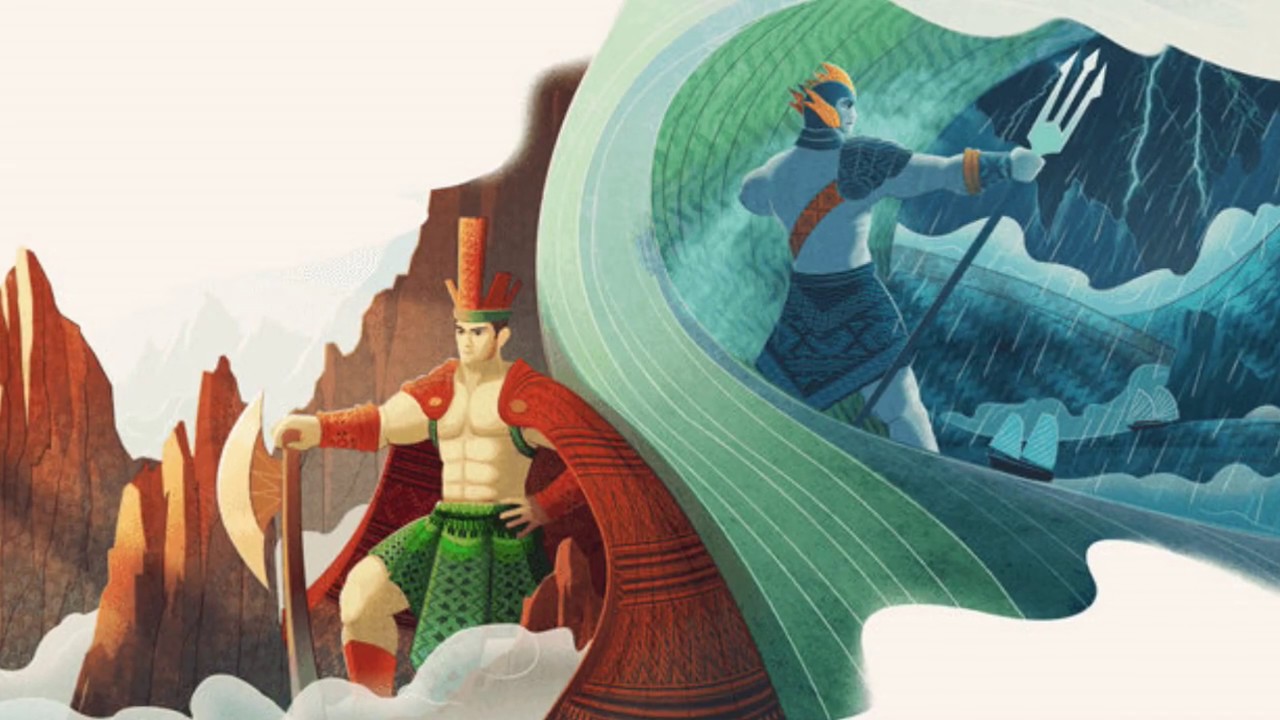
The thing is, Thuy Tinh never really let it go. Every single year he comes back to try again, and every year the mountain god pushes him away. That, according to the story, is why Vietnam floods each rainy season. The water rises, the land holds, the water retreats.
What I find genuinely moving about this piece of vietnam folklore is how it turns a natural disaster into a story about human grit. Thuy Tinh is the flood. Son Tinh is the people, standing firm, rebuilding, refusing to be washed away. I heard this from a farmer in the north whose fields flood most years. He shrugged when he finished and said, more or less, "The water always comes. We always stay." That was the whole moral, right there in his rice paddy.
The lake in the middle of Hanoi
Now, back to that turtle Duc told me about outside the noodle shop.
If you sign up for pretty much any decent vietnam travel package, you'll end up walking around Hoan Kiem Lake in the heart of Hanoi. It's the city's living room, honestly. People jog around it at dawn, couples take wedding photos there, old men play chess on the benches. But the name itself is a story. Hoan Kiem means Lake of the Returned Sword, and here's why.
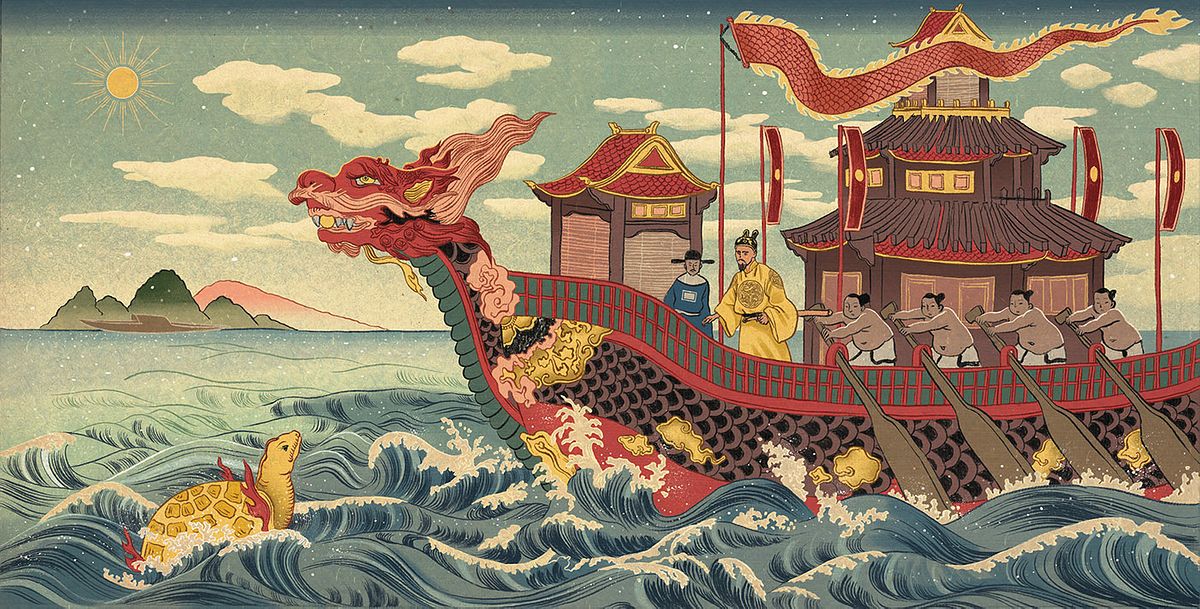
Back in the 15th century, a man named Le Loi received a magic sword from Long Vuong, the Dragon King, to fight off the invading Ming Chinese. Armed with it, Le Loi drove them out and became emperor in 1428. One day, while he was out on a boat on the lake, a golden turtle god named Kim Qui surfaced and asked for the sword back. The war was won. The weapon belonged to the divine again.
Le Loi handed it over, the turtle vanished into the depths, and the emperor renamed the lake to honor the moment. Before that it was simply called Green Water. Afterward it carried the memory of the sword forever.
There's a little tower on an islet in the middle, the Turtle Tower or Thap Rua, that everyone photographs. And the lake really does have soft-shell turtles living in it, creatures the locals treat as bringers of good luck. For years people claimed to spot an ancient giant turtle rising to the surface, and each sighting sent the whole city buzzing. That's where vietnam mythology shades into something closer to modern vietnamese urban legends, the kind of thing people argue about in cafes.
Stand at the edge of that water at sunset, with the red bridge glowing and the traffic roaring somewhere behind you, and I promise the story feels a lot less like a fairy tale.
The three kitchen gods and a heartbreak by the fire
The last tale is a strange, sad, beautiful one, and it explains a festival you might actually witness if you time your trip right.
The belief is that every household kitchen is watched over by three spirits called Tao Quan, the kitchen gods, sometimes known as Ong Lo, Ong Tao, or Ong Vua Bep. They observe everything that happens in the home. Then, on the 23rd day of the twelfth lunar month, just before the new year, they travel up to report to Ngoc Hoang, the Jade Emperor who rules the Taoist heavens. Families send them off with the finest food, spices, symbolic money, and paper clothes.
But why three gods for one kitchen? That's where the story gets you.
Long ago a poor woodcutter and his wife lived in the forest. Poverty pushed the man to drink, and he'd stumble home in ugly moods, smashing furniture. Eventually he turned his anger on his wife, and one night she'd had enough. She fled into the woods and never returned.
Lost and exhausted, she found a hunter's cabin. The hunter was a kind man. He fed her, took her in, made her his housekeeper, and in time they married. Years passed.
Then one Tet, as the new year approached, a ragged beggar came to her door asking for food. She recognized him instantly. It was her first husband, ruined and starving. She fed him and let him in. But when she heard the hunter returning, she panicked and hid the beggar under a haystack.
The hunter, knowing nothing, set the haystack alight to roast some meat, the way he always did. The beggar, terrified that revealing himself would make the hunter think his wife had betrayed him, stayed silent and let the flames take him. The wife, realizing her first husband was dying to protect her, threw herself into the fire to die at his side. And the hunter, understanding too late what had happened and blaming himself, leapt in after them both.
When the villagers learned of it, they honored the three of them for the depth of their love and sacrifice. And so the three became the kitchen gods, forever bound together at the hearth.
I heard this one from a woman in Hue while she prepared offerings for the festival. She got a little teary telling it. So did I, if I'm honest.
Location and How to Reach the Land of These Stories
The wonderful, slightly maddening thing about chasing vietnamese legends is that they're everywhere. There's no single site. The country is long and thin, over 1,600 kilometers top to bottom, so you'll be covering ground.
Most journeys begin in one of two cities.
- Hanoi in the north is the obvious base for the lake legend and the creation myth. Its international airport, Noi Bai, connects to most of Asia and plenty of long-haul routes. From the airport into the old quarter is about 45 minutes by taxi or the airport shuttle.
- Ho Chi Minh City in the south, still called Saigon by nearly everyone, is the gateway to the Mekong Delta and its own web of water spirits and river tales. Tan Son Nhat Airport sits surprisingly close to the center, maybe half an hour in decent traffic.
Getting between the story-soaked regions is half the adventure. Here's what I've used and would recommend:
- Domestic flights. For long hops, like Hanoi to Da Nang or Saigon, flying saves you a full day. Cheap, frequent, reliable enough. Book a week or two ahead for the best fares.
- The reunification train. If you have the time, the north-to-south rail line is one of the great slow journeys of Southeast Asia. The stretch between Hue and Da Nang, hugging the coast over the Hai Van Pass, is worth the ticket alone.
- Private car and driver. For places like the ancestral Hung King temples near Phu Tho, or the karst valleys of Ninh Binh, having your own driver is the way to go. This is where a well-built vietnam tour package earns its keep, because your guide handles the logistics while you soak up the stories.
- Motorbike. Only if you know what you're doing. The traffic is a living organism with its own logic. Beautiful for the northern mountains, terrifying in the cities.
My honest tip: don't try to do the whole country in one go unless you've got three weeks. Pick north or center or south, go deep, and leave the rest for next time. Rushing a vietnam vacations packages itinerary is the fastest way to see everything and remember nothing.
Best Time to Visit
Vietnam's weather is a genuine puzzle because the country spans so many latitudes. What's glorious in one region can be miserable in another on the exact same day. I learned this the hard way, packing for sunshine and landing in a Hanoi drizzle that lasted a week.
Broadly, here's how I'd break it down.
The north (Hanoi, Halong, Ninh Binh, Sapa)
- October to April is the sweet spot. Cool, dry, comfortable. The autumn months especially, October and November, are lovely for walking around Hoan Kiem Lake without sweating through your shirt.
- May to September brings the heat and the rains, which, if you've been paying attention, is Thuy Tinh throwing his annual tantrum. It's atmospheric, but it's sticky.
The center (Hue, Hoi An, Da Nang)
- February to August stays mostly dry and warm here.
- September to December is the wet season, and this coast can get serious storms. Time your trip carefully if you're heading to Hue for the kitchen god traditions.
The south (Saigon, Mekong Delta, Phu Quoc)
- December to April is the dry season and the most reliable stretch.
- May to November is the rainy season, though the showers are usually short and dramatic rather than all-day soakers.
If you want to actually see the kitchen gods being sent off and Tet in full swing, aim for late January or early February, when the lunar new year falls. The whole country transforms. Markets overflow, kumquat trees appear on every motorbike, and the folklore stops being abstract and becomes something you're living inside. Just know that flights and hotels get booked solid and many places close, so plan a vietnam package travel arrangement well in advance.
What to Expect on the Ground
Here's the reality check. You won't walk up to a sign that says "Legend Happened Here" with a gift shop attached. Vietnam's myths reveal themselves slowly, through places and people, and the more curious you are, the more you'll get out of it.
Walking through the stories
At Hoan Kiem Lake, cross the arched red Huc Bridge to Ngoc Son Temple on its little island. Inside, somewhat startlingly, there's a preserved giant turtle in a glass case, a physical link to the sword legend that gives you a genuine chill. Go early, around 6 a.m., when the locals are doing tai chi and the tour buses haven't arrived.
Up north, the Hung Kings' temples near Viet Tri honor the mythical founding dynasty from the creation story. During the Hung Kings' festival in the third lunar month, pilgrims arrive by the tens of thousands. It's loud, crowded, and completely sincere.
In the center, Hue's old imperial city and the surrounding countryside are where I heard the richest kitchen god stories, tied up with ancestor worship and elaborate home altars. Watching a family prepare their Tao Quan offerings is a quiet privilege.
Down in the Mekong Delta, the water spirits take over. Floating markets, coconut-candy workshops, and boatmen who'll tell you which bends in the river are lucky and which are haunted. This is vietnam myths at their most everyday.
The value of a good storyteller
I'll say this plainly. The single best thing I did was book time with local guides who actually knew the tales rather than just the dates. A great guide turns a pile of old stones into a saga. This is exactly why so many travelers gravitate toward vietnam small group tours, where you get that personal connection without the anonymity of a big coach group. The guide has time to answer your questions, and the stories flow better over a shared meal than through a megaphone.
Expect, too, a certain amount of sensory overload in the best way. The smell of incense and frying garlic. The racket of scooters. The taste of an egg coffee while someone explains why the turtle is sacred. It all blends together, and that blend is the actual experience.
Travel Tips I Wish Someone Had Given Me
Let me hand over the practical stuff, the things I picked up through trial and error so you don't have to.
On entry and paperwork. Most travelers need a visa or e-visa. The online e-visa system is straightforward, so apply a few days before you fly and print the approval. Rules shift, so double-check the current requirements close to your departure. Any reputable operator arranging your vietnam travel tour packages will flag this for you, but don't assume, confirm it.
On money. Vietnam runs largely on cash, especially in markets and smaller towns. The dong comes in bills with a lot of zeros, so take your time counting. Keep small notes for street food and offerings at temples.
On temples and altars. Dress modestly. Shoulders and knees covered. Take your shoes off where indicated. If you see a family making offerings to the kitchen gods or ancestors, don't shove a camera in their faces. Ask, or better, just watch respectfully.
On photography. The golden hours are your friend, particularly at Hoan Kiem Lake when the mist sits on the water and the Turtle Tower glows. For the incense-filled temple interiors, bump up your ISO and steady yourself against a pillar rather than using flash, which kills the atmosphere and annoys everyone. And always ask before photographing people. A smile and a gesture toward your camera goes a long way.
On the language. Learn a few words. "Xin chao" for hello, "cam on" for thank you. It won't make you fluent, but it cracks smiles open and often unlocks the better stories.
On what to pack. A light rain layer no matter the season. Comfortable shoes you can slip on and off. A refillable water bottle. And genuine curiosity, which weighs nothing and is worth more than anything in your bag.
On eating. Follow the crowds. A busy street stall with a queue of locals is safer and tastier than an empty tourist restaurant. Some of my best legend-swapping happened over bun cha and cheap beer on those little plastic stools.
On bargaining. It's expected in markets, gentle and good-humored, never aggressive. Smile, offer around 60 to 70 percent of the first price, meet somewhere in the middle. Don't fight over the equivalent of pocket change.
How to Build These Legends Into Your Trip
This is the fun part, mapping it all out. The beauty of Vietnam is how naturally the mythology threads through a normal sightseeing route. You don't need a special "myth tour." You just need to know what you're looking at.
Here's a framework I'd suggest, adjustable depending on how long you've got.
A week in the north
- Days 1 to 3: Hanoi. Hit Hoan Kiem Lake and the sword legend, wander the old quarter, take a day to reach the Hung Kings' temples for the creation myth.
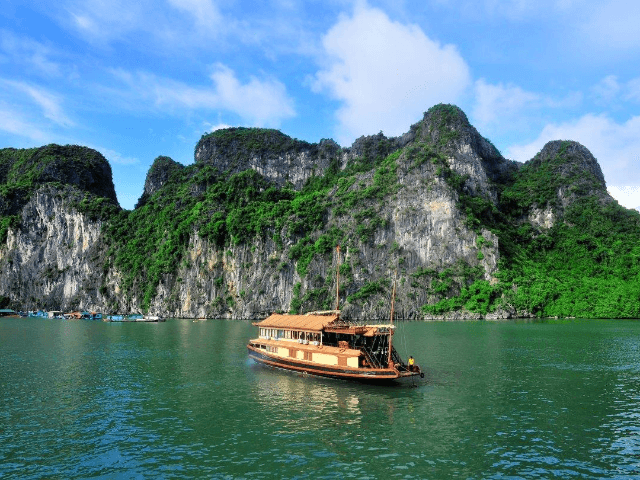
- Days 4 to 5: Halong Bay, whose name literally means "descending dragon," another slice of dragon lore where the karst islands are said to be the jewels a dragon spat into the sea. A cruise here is close to mandatory.
- Days 6 to 7: Ninh Binh, the so-called Halong on land, with its temples, caves, and river valleys thick with old stories.
Ten days to two weeks, north to south
Add the center. Fly or take the train to Hue and Hoi An, where the kitchen god traditions and ancestor worship come alive, then continue to Saigon and the Mekong Delta for the river spirits. A thoughtfully assembled vietnam tourism packages itinerary can stitch these together with private guides who know the folklore at each stop, which makes the whole thing hang together instead of feeling like disconnected sightseeing.
Reaching beyond the border
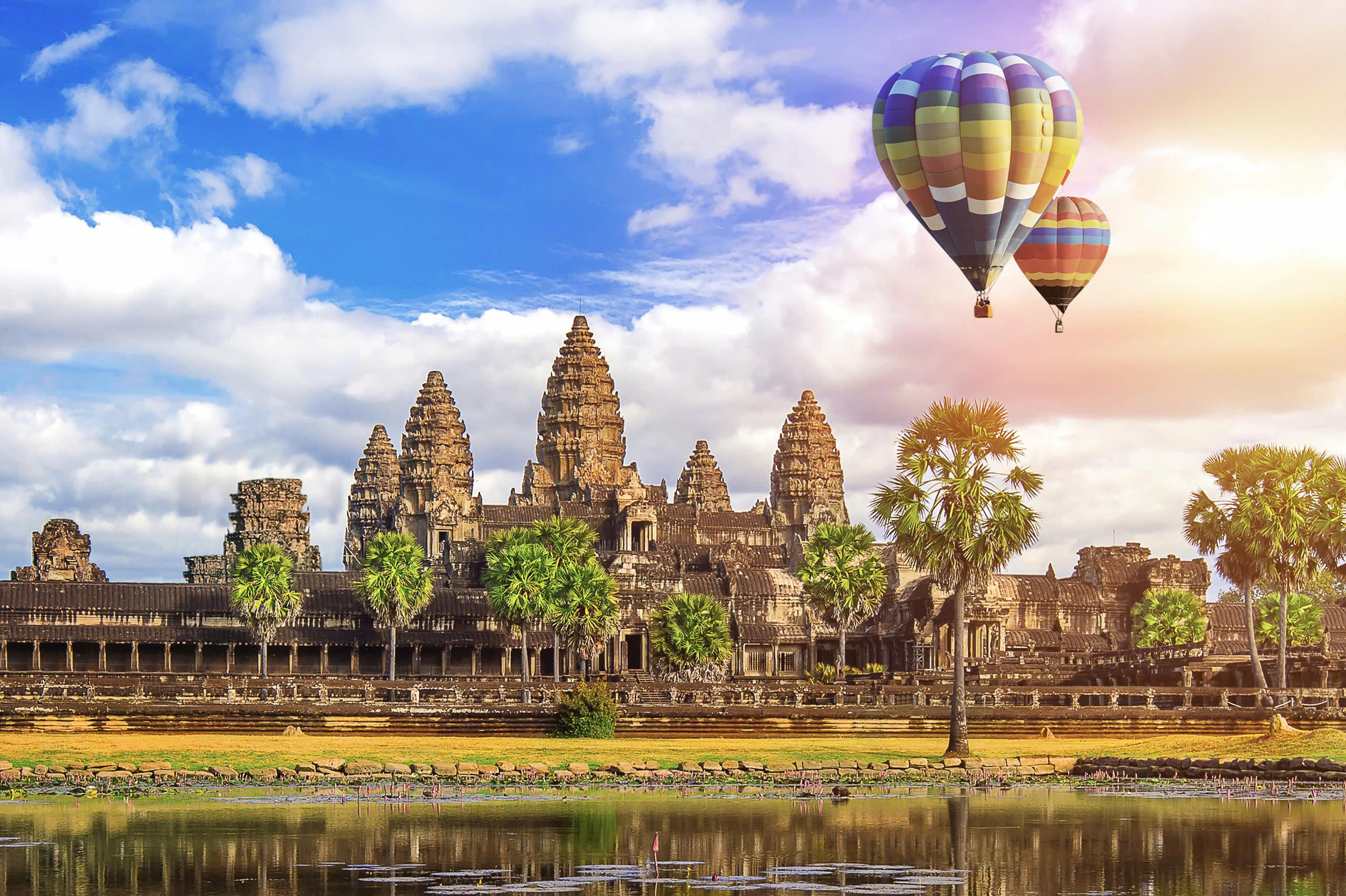
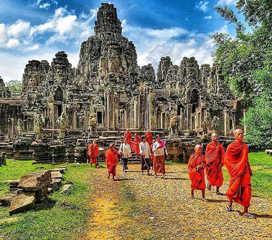
Here's something I'd genuinely urge you to consider. If the mythology grabs you the way it grabbed me, the neighboring countries carry the thread further. The temple complexes and legends of Cambodia sit right next door and complement Vietnam beautifully. Plenty of travelers book combined vietnam and cambodia tours for exactly this reason, pairing the sword lake and dragon bay with the sprawling wonder of Angkor.
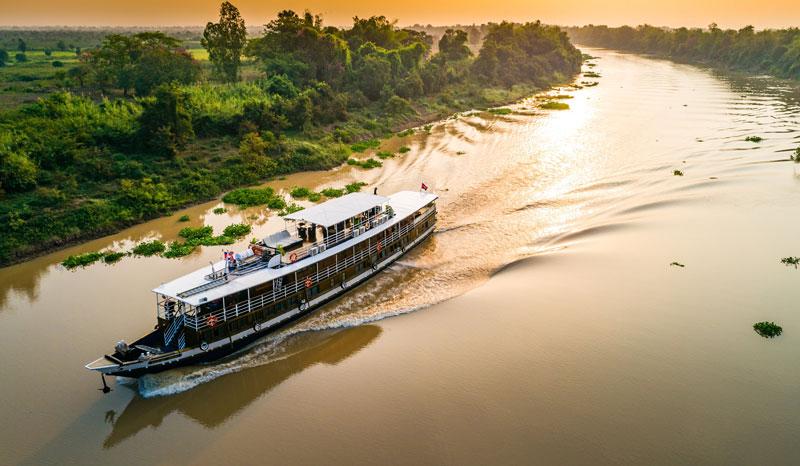
I did a version of this myself and can vouch for how well the two fit. The tours of vietnam and cambodia typically route you from the Mekong up into Cambodia by boat or short flight, so you feel the cultures shift gradually rather than jumping between them. And if you've really got the time and appetite, the broader loop of vietnam cambodia and thailand tours rounds out the region with Bangkok's glittering temples and the mountain north around Chiang Mai. Three countries, three mythologies, one journey. It's a lot, but it's the kind of trip you talk about for years.
However you slice it, I'd lean toward fewer places and deeper stays over a frantic dash. The legends reward patience. They come out over long dinners and slow boat rides, not on a stopwatch.
What are the most famous UNESCO World Heritage sites in Vietnam?
Vietnam's mythology can also be experienced alongside some of the country's most famous UNESCO World Heritage sites. Ha Long Bay, with its descending-dragon legend, is one of the most obvious connections. Travelers can also combine the cultural heritage of Hue, the historic trading streets of Hoi An, and the spectacular landscapes of Ninh Binh with the stories and traditions attached to each region. Including these places in a Vietnam itinerary gives you a chance to experience the country's history, landscapes, and folklore together.
FAQ
What is the Vietnamese creation myth about?
The vietnamese creation myth tells of the dragon lord Lac Long Quan and the mountain fairy Au Co, who married and had a hundred children hatched from a hundred eggs. When the couple parted, half the children went to the sea with their father and half to the mountains with their mother, and they became the ancestors of all Vietnamese people. It's the reason many locals feel a literal kinship with one another, and their eldest son is said to have founded the first Hung dynasty.
Where can I actually experience Vietnamese folklore as a traveler?
You'll find vietnamese folklore woven through everyday places rather than confined to museums. Stand at Hoan Kiem Lake in Hanoi for the returned-sword legend, visit the Hung Kings' temples near Viet Tri for the founding myth, spend time in Hue during Tet for the kitchen god traditions, and drift through the Mekong Delta for its water spirits. Local guides bring these stories to life far better than any signboard.
What are the most famous Vietnamese myths and legends?
Among the best known vietnamese myths and legends are the creation story of Lac Long Quan and Au Co, the battle between the mountain god Son Tinh and the water god Thuy Tinh that explains the yearly floods, the tale of the golden turtle and the returned sword at Hoan Kiem Lake, and the origin of the three kitchen gods. Each one carries a moral about family, resilience, or sacrifice.
Are Vietnamese urban legends still believed today?
Yes, and that surprised me. Alongside the ancient tales, modern vietnamese urban legends thrive, like reported sightings of a giant sacred turtle rising in Hoan Kiem Lake, which used to send the whole city talking. Beliefs about lucky and unlucky days, spirits in the home, and ancestral protection remain a real part of daily life, not just tourist folklore.
How does Vietnamese mythology connect to real history?
The fascinating thing about vietnam mythology is how it merges with the historical record. The creation myth flows straight into the Hung Kings, treated as Vietnam's first real dynasty, and the sword legend centers on Le Loi, an actual emperor who took the throne in 1428. The line between the mythical and the historical is deliberately blurry, and locals often treat both as part of the same continuous story.
What does the legend of Son Tinh and Thuy Tinh explain?
This piece of vietnam folklore explains the country's yearly floods. Thuy Tinh, the water god, lost a contest for a princess to Son Tinh, the mountain god, and returns every year with storms and floods to seek revenge, only to be pushed back each time. The water god represents natural disaster, while the mountain god stands for the endurance of the Vietnamese people who rebuild after every flood.
Can I combine Vietnam's legends with visits to other countries?
Absolutely. Many travelers extend their trip with vietnam and cambodia tours to pair Vietnam's dragon and turtle lore with the temple legends around Angkor. The longer regional loops that add Thailand round out the mythology even further. A good operator can weave these into a single itinerary so the cultures unfold naturally as you travel.
Do I need a guide to understand the myths and legends?
You can absolutely explore independently, but the stories land far deeper when a local tells them. That's why vietnam small group tours work so well here, giving you time and closeness with a guide who knows the folklore behind each site. Hearing the tales from someone who grew up with them is a completely different experience from reading a plaque.
Why This Trip Belongs on Your List
Some destinations you visit for the views. Vietnam you visit for the stories, and the views turn out to be a bonus. That's the honest truth I carried home. Long after the photos of Halong Bay and the sunsets over Hoan Kiem Lake blurred together, what stayed sharp were the tales, the dragon lord and his mountain wife, the two gods still fighting over a princess every rainy season, the three lovers who became the guardians of the hearth.
These vietnam myths aren't decoration. They're the framework a whole culture built itself on, and getting close to them changed how I saw everything else about the place. The resilience of the people, the reverence in the temples, the way families gather at year's end all made sense once I knew the stories underneath.
If you're the kind of traveler who wants more than a checklist, put this country near the top and give yourself real time here. Talk to the guides. Sit on the plastic stools. Ask about the turtle. A thoughtfully planned vietnam country tour will get you to the landmarks, but it's the legends whispered along the way that you'll be telling your own friends about for years. Pack light, stay curious, and let Vietnam tell you its stories in its own time. You won't come home the same.
Customize This Itinerary
Let our local experts design the perfect itinerary for you. It’s free, personalized, and take less than 24 hours !
 No obligation100% personalizedBest Price Guarantee2M$ Liability Insurance
Follow Us