


Planning a vietnam trip? Let us help.
Get personalized travel plan based on your interest, budget and preferred travel dates
Are you planning to visit Vietnam during Tet holiday this year? Take some must-see notes below before your Vietnam tour starts.
TABLE OF CONTENTS
1
What Tet actually is (and why it swallows the whole country)
The color of a city about to celebrate
2
The overview: what a Tet trip actually feels like
3
Location and how to get around when half the drivers went home
Getting into the country
Moving around a city
4
The money situation: prices, cash, and not starting a fight
How do I find affordable Vietnam tour packages?
Where you'll feel it, and where you won't
A quiet cultural note about money
5
Best time to visit and what the weather's actually doing
The north
The center
The south
6
How should I pack differently for Vietnam in February versus October?
7
What to expect: the sights, region by region
Up north
The center
The south
8
Accommodation and eating well when the kitchens are closed
The eating problem, and how to solve it
The best thing I did: staying with a family
9
Travel tips I wish I'd had on day one
10
How to build Tet into your travel itinerary
The classic north-to-south run
Slower, smaller, deeper
11
What are the best luxury tours to Vietnam for a personalized experience?
Crossing borders: adding Cambodia and beyond
A word on booking
12
How can I customize my private tour in Vietnam to include specific sites?
13
FAQ
How many days is Tet holiday in Vietnam?
When do the Tet holidays in Vietnam take place?
Is it worth visiting Vietnam during Tet holiday?
Are shops and restaurants open during Tet holidays?
Do prices go up during a Tet holiday in Vietnam?
What should I pack and prepare for a Tet vietnam holiday?
Can I combine a Vietnam Tet trip with other countries?
How do I get around cities during Tet when so many people have left?
14
Go, but go prepared
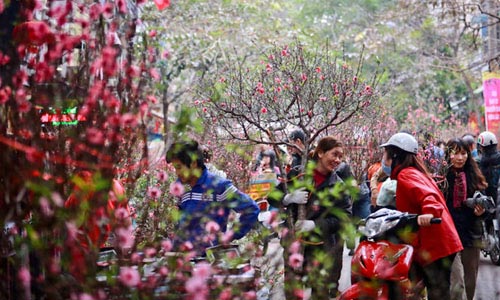
I still remember standing in a Hanoi flower market two days before Tet, getting gently elbowed by a woman balancing an entire peach tree across the back of her scooter. She wasn't rude about it. Nobody was. Everyone had somewhere to be, someone to see, and a slightly manic joy about the whole thing. That was the moment Vietnam stopped being a country I was passing through and became a place I actually understood a little.
If you're thinking about a vietnam country tour during the Lunar New Year, I want to save you the confusion I walked into blind. Tet is the best and the most complicated time to be here, all at once. It's loud, warm, occasionally frustrating, and honestly one of the more moving things I've experienced as a traveler. But you have to know what you're getting into, because half the country basically shuts its doors to go home and hug its grandparents.
So let's talk about it. The good, the awkward, the practical bits nobody warns you about, and why I'd still tell you to book a vietnam trip package around this time if you have the flexibility. This is the stuff I wish someone had told me before I showed up expecting business as usual.
What Tet actually is (and why it swallows the whole country)
Tet, or the Lunar New Year, is the biggest deal on the Vietnamese calendar. Full stop. It's been the most important festival across a chunk of Asia for thousands of years, and here it carries a weight that Christmas and New Year's Eve combined don't quite match in the West.
Because it follows the lunar calendar, the date shifts every year. Usually it lands somewhere in late January or early February. People always ask me how many days is tet holiday in vietnam, and the honest answer is: it depends on the year. By law the official break runs somewhere between seven and eleven days, and the government sets the exact stretch annually. But the spirit of it lasts longer than the paperwork. The lead-up starts a week or two early, and the wind-down drifts into the weeks after. You feel it in the air long before and long after the calendar says it's happening.
At its heart, Tet is about going home. Vietnamese who've spent the year working in cities pack up and travel back to their home provinces to be with parents, grandparents, cousins, old neighbors. Debts get settled. Houses get scrubbed top to bottom. Ancestral altars get fresh fruit and incense. There's a whole choreography to it that took me a few visits to even begin to appreciate.
The color of a city about to celebrate
The thing I didn't expect was how visual the run-up is. In the days before Tet, markets in Hanoi and villages everywhere overflow with flowers. Peach blossoms in the north, their branches this delicate crimson-pink. Yellow apricot blossoms down south. Kumquat trees loaded with tiny orange fruit, wobbling along on the backs of motorbikes like they're being kidnapped.
You'll see people carrying flower pots, dragging blossom branches, hauling home enough food to feed an army. Little alleys you'd normally walk past without a glance suddenly hum with this warmth. There's a generosity in the air during this window that's hard to fake. Strangers smile more. People give each other genuinely kind words, across differences that might normally keep them apart.
That's the payoff for planning a tet holiday vietnam trip. You're not watching a festival from behind a rope. You're standing in the middle of a country doing the most heartfelt thing it does all year.
But — and this is the part I'll keep coming back to — that warmth comes bundled with a lot of closed shutters and doubled prices. So let's get practical.
The overview: what a Tet trip actually feels like
Let me set expectations, because I think that's where most travelers get tripped up.
For roughly the first several days of the lunar new year, a huge number of shops, restaurants, and small businesses simply close. Not because they don't want your money. Because the owners have gone home to their families, same as everyone else. Many places stay shut until the sixth day of the lunar month, or until whatever day their family considers auspicious to reopen. Some clever shops open earlier to grab the customers everyone else is ignoring, but you can't count on your favorite noodle spot being one of them.
So the picture is this: quieter streets, a strange and lovely emptiness in normally chaotic cities, and a scramble to find things that are open. If you've come expecting a full-throttle tourist machine, you'll be thrown. If you've come to witness a country turning inward toward home and hearth, you'll fall for it.
The highlights I'd flag for anyone considering a vietnam travel package at this time:
- Flower markets in the pre-Tet days, absolutely unmissable, and free.
- The genuine quiet in Hanoi and Ho Chi Minh City, when the traffic that usually terrifies visitors just… evaporates.
- Regional differences in how Tet is celebrated, north to south, which you only catch if you move around the country.
- Pagodas and temples packed with locals praying for luck and prosperity, a real slice of living tradition.
- The chance, if you plan it, to spend the holiday inside a Vietnamese home.
That last one changed my whole read on the country. I'll come back to it.
Location and how to get around when half the drivers went home
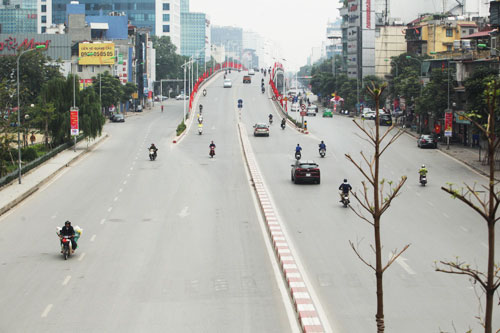
Here's a funny problem. Tet is one of the very few times all year when there's basically no traffic jam in the big cities. The roads that normally look like a video game on hard mode go weirdly serene. Locals mostly walk or grab public transit for their visits around town.
Sounds great, right? It is, until you try to actually go somewhere.
Getting into the country
You'll fly into Hanoi (Noi Bai) in the north, Da Nang in the center, or Ho Chi Minh City (Tan Son Nhat) in the south. Airports run through Tet, and this is where I'd strongly suggest you handle your money situation, because — and I cannot stress this enough — banks close during the holiday. More on cash in a minute.
Domestic flights and trains between cities get booked solid and pricey during this window, because millions of Vietnamese are traveling home at the same time. If your vietnam tour package involves hopping between regions, book those internal legs early. Like, embarrassingly early. Waiting until you land is how you end up stuck.
Moving around a city
Buses keep running through Tet, and they're your cheapest bet. They generally operate from around 6 in the morning until roughly half nine at night. My advice from experience: write down your destination and your stop before you get on, note any transfer you need, and double-check the timetable. Miss the last one and you're in for a longer, more expensive night than you planned.
The real lifesaver, though, is ride-hailing. Apps like Grab are everywhere now, along with a few local competitors. Some drivers live in the city and keep working through the holiday because people still need to move around. Rides can be harder to snag and a touch pricier than usual, but you see the fare before you confirm, which beats standing at a bus stop wondering if anything's coming.
I learned to just accept it. During Tet, transport takes patience. You wait a little longer, you pay a little more, you don't get grumpy about it. The city gave you empty, peaceful streets in exchange, and that's a fair trade.
The money situation: prices, cash, and not starting a fight
Let's talk about the elephant in the room, because everyone traveling on vietnam vacations packages during Tet asks the same thing. Does everything cost more? Yes. Mostly, yes.
And I want to be clear about why, because I misread it at first. Vendors aren't hiking prices because you're a foreigner. They're doing it because that's the custom this time of year, for everyone, locals included. Food, transport, accommodation, services — a lot of it climbs during the holiday. Fewer people are working, demand is high, and the whole rhythm of commerce changes.
How do I find affordable Vietnam tour packages?
If you're trying to find an affordable Vietnam tour package, the biggest savings usually come from planning early and being flexible about dates, accommodation, and the number of regions you cover. Tet itself is one of the more expensive periods because domestic demand is extremely high, so booking flights, hotels, and major excursions well ahead can make a noticeable difference. Comparing package inclusions is also important: a cheaper headline price isn't necessarily better if transportation, meals, guides, or entrance fees are excluded.
Where you'll feel it, and where you won't
It's not a blanket rule across every shop in the country. It varies a lot by where you go.
In traditional markets, expect higher opening prices than normal. You can bargain a bit and land on something reasonable, but come in knowing the game has changed for the season. My rule became: always ask the price before I committed to anything. Especially at a food stall, ask, agree, then sit down. It spares you an awkward moment at the end.
Supermarkets and shopping malls are a different story. A lot of them hold prices steady before, during, and after the new year for the sake of stability, and they run promotions that make it genuinely easy to grab a good deal. If price certainty matters to you, that's where to shop.
Popular restaurants and entertainment spots often either keep prices as they are or add a modest surcharge, usually somewhere around ten percent, and they'll tell you upfront before you use the service. That transparency I appreciated.
The one non-negotiable piece of advice: carry cash, in Vietnamese dong. Most small shops run on cash, and with the banks closed you can't rely on topping up mid-holiday. Change money before you leave home or at the airport when you land, and carry more than you think you'll need. I got caught short once on the second day of Tet and it was a humbling little scramble.
A quiet cultural note about money
There's a superstition worth respecting: don't lend or borrow money during Tet, and definitely not on the first day of the new year. It's tied to how the whole year is supposed to unfold — start it in debt and, well, the belief is it follows you. You won't be quizzed on it, but being aware of it is the kind of thing that earns a warm look from locals.
Best time to visit and what the weather's actually doing
Since Tet's date moves, the weather you'll get depends partly on the year, but late January and early February give you a pretty consistent seasonal picture across the regions. And Vietnam's weather is genuinely three different countries stacked on top of each other, so pack accordingly.
The north
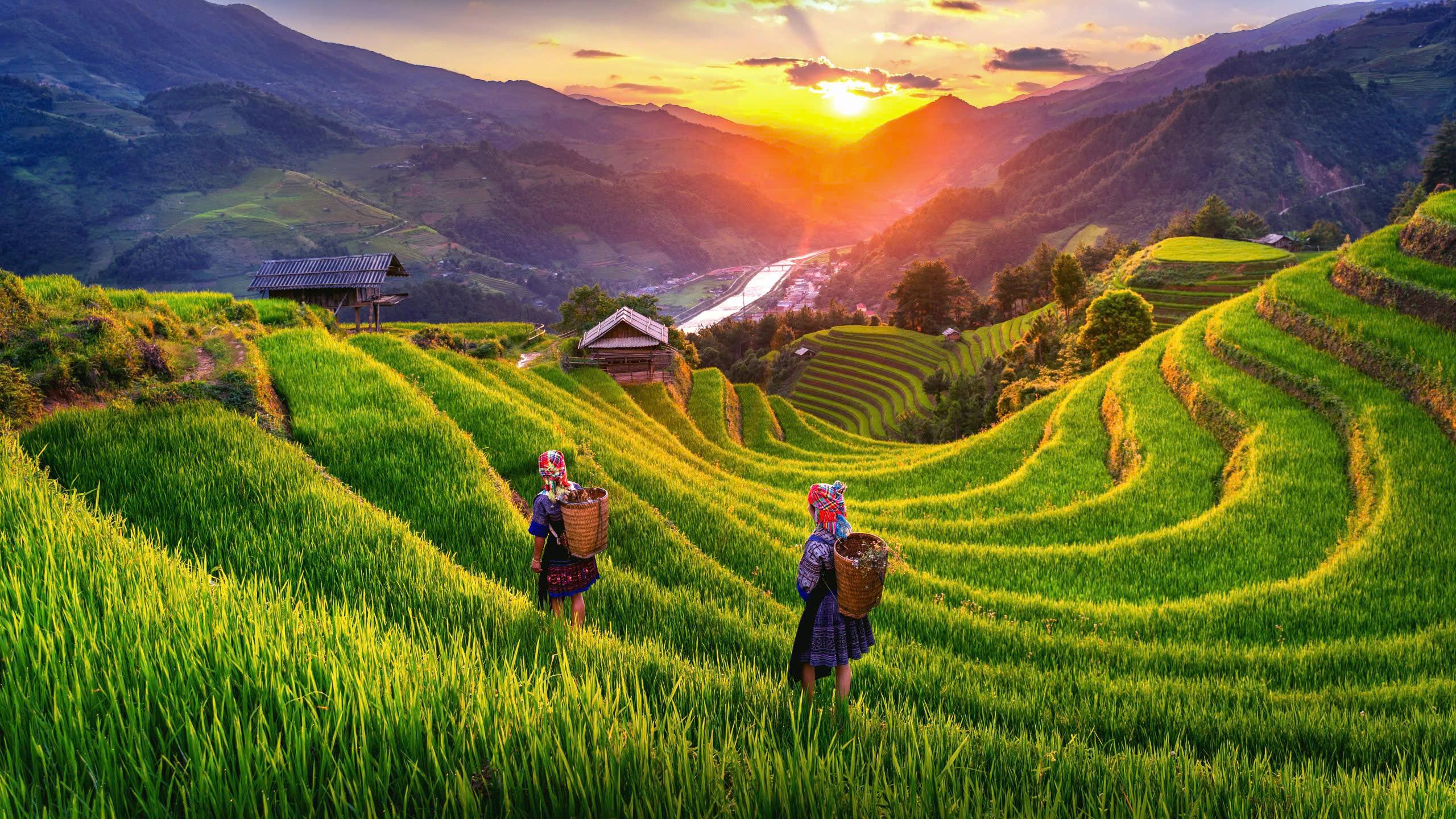
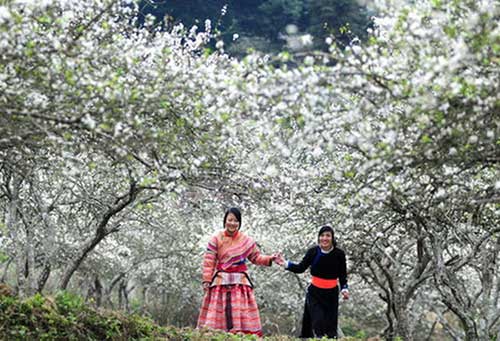
Up in Hanoi and the mountains, Tet lands in spring, and it can be cool and damp. Bring layers. This is also when the northern highlands put on their best show. The hills and mountains get blanketed in blossom — the pure white of ban flowers, the pink flush of peach blossom rolling from valley floor to ridge line. If you make it to Sa Pa, Moc Chau, or Mai Chau, you're rewarded with landscapes that look almost staged, they're so pretty. I've stood on a hillside in Moc Chau in early February with mist burning off the peach trees and genuinely forgotten to take a photo, which for me is high praise.
The center
Da Nang, Hue, and Hoi An sit in a milder middle zone. It can still be a bit gray and cool around Tet, occasionally drizzly, but generally more forgiving than the north. Perfectly walkable, which matters because Hoi An's old town is best experienced on foot with a lantern-lit evening ahead of you.
The south
Down around Ho Chi Minh City and the Mekong Delta, it's warm and dry, closer to what most people picture when they think Southeast Asia. Light clothes, sun protection, the works. The contrast with a chilly Hanoi morning is stark enough that plenty of travelers deliberately build a north-to-south route just to feel the country's whole spread of climate and character in one trip.
So the short version: whenever Tet falls, prepare for a range. A jacket for the north, breathable stuff for the south, and something you don't mind getting a little rain on in the center.
How should I pack differently for Vietnam in February versus October?
February versus October requires a different approach to packing. February can bring cool, damp conditions in northern Vietnam, particularly around Hanoi and the mountain regions, while central and southern areas are generally warmer. A light jacket, long sleeves, comfortable walking shoes, and a compact rain layer are useful if you're traveling north during Tet. October is more transitional: northern Vietnam can be pleasant and cooler, while central Vietnam may experience more rain and storms, and the south remains warm with a higher chance of showers. For either month, lightweight clothing, comfortable shoes, and a waterproof layer are useful, but the balance between warm layers and rain protection depends heavily on your route.
What to expect: the sights, region by region
This is where a vietnam package travel itinerary really earns its keep, because Tet looks different everywhere, and moving between regions is how you understand that.
Up north
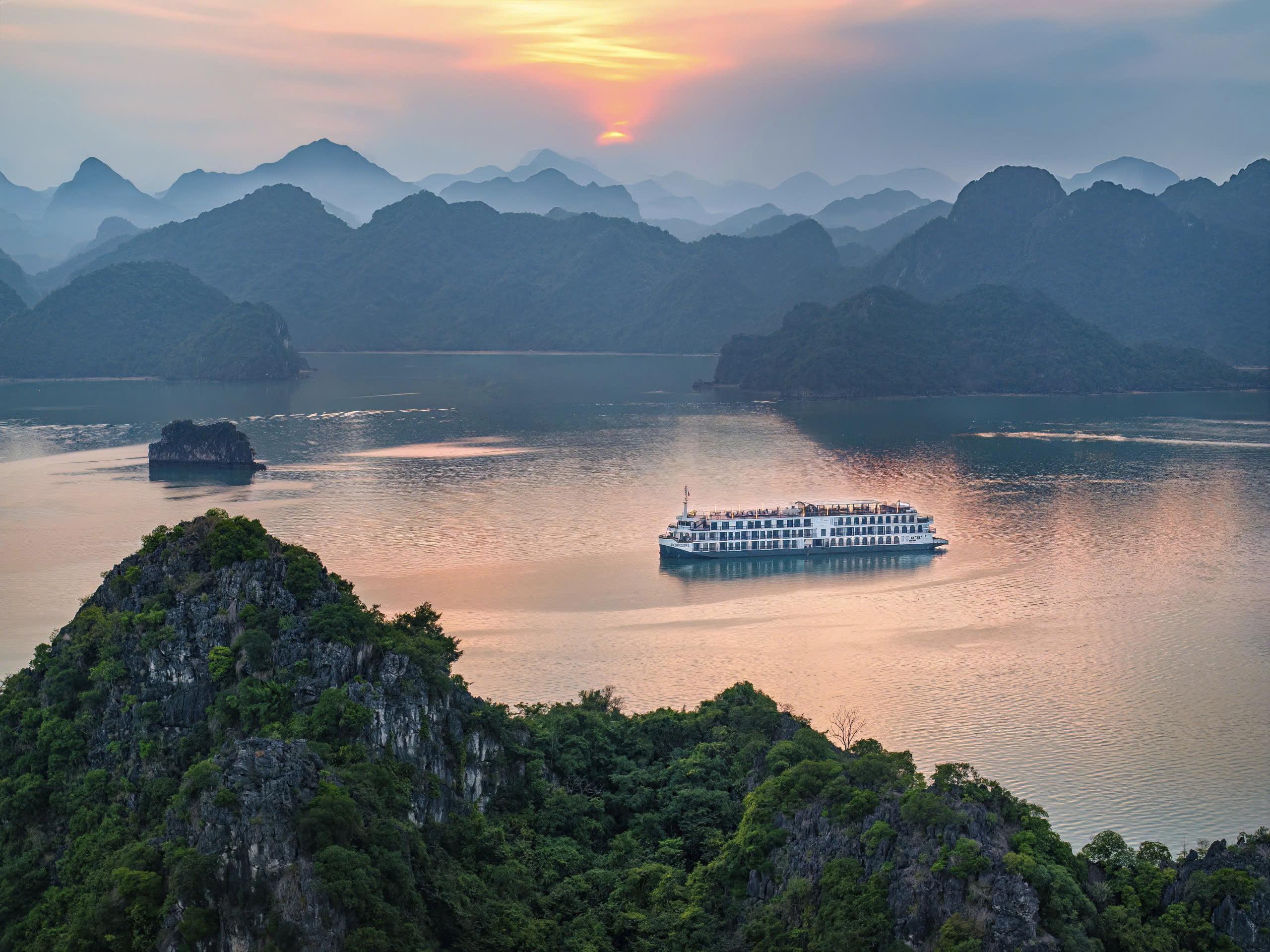
Halong Bay stays open and running through the holiday, which is a relief, because a cruise out among those limestone karsts is one of the country's signature experiences. From what I've seen, the sightseeing ticket prices there tend to hold steady over Tet rather than spiking, so it's a reliable inclusion. Waking up on a boat, mist hanging over the water, those jagged islands emerging one by one — it hits differently in the quiet of the holiday season.
Hanoi during Tet is a softer version of itself. Less traffic, cleaner air, this hushed elegance the city doesn't usually get to show off. You can wander to the Temple of Literature, pay your respects at the Ho Chi Minh Mausoleum, or walk out to Tran Quoc Pagoda on its little peninsula in West Lake, which is especially atmospheric when locals are visiting to pray for the year ahead.
If you want to see life outside the city center, a day out to Bat Trang Ceramic Village or Duong Lam Ancient Village is a good call. Bat Trang for the pottery, Duong Lam for the old brick houses and a slower, rural version of the new year. Just check ahead on opening — some workshops close for the holiday too.
And then the mountains, which I already gushed about. If flowers and dramatic scenery are your thing, the northern highlands during Tet are the reason to time a trip this way.
The center
Da Nang knows it's a tourism city and leans into it. During the holiday there are games and festivals going, so it's not the place you'll feel stranded and bored. It's lively in a family-friendly way.
Hue is a short hop from Da Nang and is a completely different mood. The old Nguyen citadel and imperial complex have this faded grandeur to them, and exploring the tombs and palaces with fewer crowds around is genuinely lovely. It's got a stateliness that rewards slowing down.
Hoi An might be my personal favorite at Tet. The old town, the tailors, the riverfront glowing with lanterns — it soaks up the new year mood beautifully. A private tour here lets you drift at your own pace, and honestly that's how Hoi An deserves to be seen. Get lost on purpose. Eat too much. Watch the lanterns reflect on the water.
The south
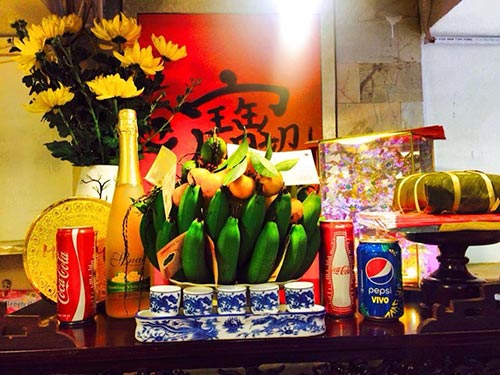
Flying down to Ho Chi Minh City and continuing into the Mekong Delta rounds out the picture, and I'd argue you haven't really "done" Vietnam at Tet until you've seen how the south celebrates. The customs down here differ from the north in ways big and small — the flowers, the altar offerings, the food, the pace. You'll notice the five-fruit trays on southern altars, each fruit chosen for the wish its name suggests. Little details like that stack up into a much fuller understanding of the country.
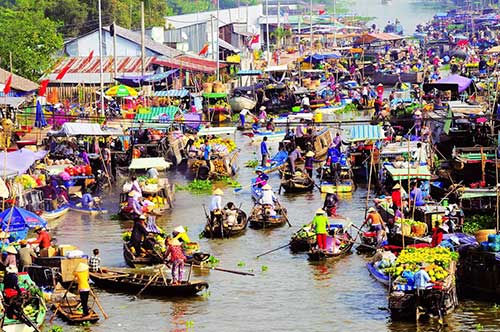
A floating market like Cai Rang near Can Tho, if it's running when you visit, is a burst of energy and color on the water. Even during the holiday the delta has this irrepressible bustle to it.
Move from Hanoi's spring chill to the delta's warm mornings over a week or two and you'll walk away with a genuinely layered sense of Vietnam. That's the argument for a proper multi-region route rather than parking in one city.
Accommodation and eating well when the kitchens are closed
Good news first: you will absolutely find somewhere to sleep. Hotels are one of the few sectors that keep humming right through the holiday. The catch is the price, which can double or even triple depending on where and when. The single best thing you can do is book early. The sooner you lock in a room, the better the rate, and I'd always confirm the reservation again a bit closer to the date just to be safe.
Some hotels and homestays throw a special new year celebration for their guests — a dinner, a countdown, that kind of thing. It's worth asking whether yours does when you book, because being folded into a celebration like that beats sitting alone in a room watching the fireworks from a window.
The eating problem, and how to solve it
Here's the honest catch of a Tet trip: food logistics take planning. A lot of the beloved little restaurants, family-run spots, and street stalls close for the holiday. That legendary hole-in-the-wall pho place someone told you about? Might have a metal shutter down for a week.
What I do:
- Check opening times for any specific restaurant I've got my heart set on, in advance.
- Assume many street vendors and food stalls will be scarce for the first few days.
- Lean on hotel restaurants and larger establishments, which are more likely to stay open.
- Keep a few snacks and some cash on hand for the odd hungry gap.
None of this is a dealbreaker. You just can't wing it the way you would in, say, October.
The best thing I did: staying with a family
If you take one piece of advice from me, take this one. Some tour operators arrange homestays with local families over Tet, and it's an entirely different level of experience. You live in someone's home. You help wrap Banh Chung, the square sticky rice cakes bound in green leaves that are the edible symbol of the holiday. You roll fried spring rolls, fuss over dried fruits, and generally muddle through the rituals alongside a family who's happy to explain them.
I spent one Tet doing exactly this, on the outskirts of a northern town, and I learned more in three days about Vietnamese life than in weeks of solo wandering. There was a grandmother who kept refilling my bowl before I'd finished it, a kid who taught me the greeting phrases, and a moment at midnight when the whole street lit incense at once. You can't buy that in a museum. It's the kind of thing that turns a vietnam tourism packages brochure into an actual memory you carry around for years.
Travel tips I wish I'd had on day one
Some of these I learned the easy way. Some the hard way. All of them matter more during Tet than they would at any other time of year.
Carry cash, in dong. I know I've said it. I'm saying it again because it's the mistake I see travelers make most. Banks close, cards aren't accepted in many small places, and ATMs can run dry. Change money at home or at the airport and carry a healthy buffer.
Don't lend or borrow money, and steer especially clear of it on the first day of the year. It's a superstition, but it's a widely held one, and respecting it costs you nothing.
Dress a little tidy. Keeping your clothes clean and neat is a small sign of respect to the people welcoming you into their new year. You don't need to be formal, just presentable.
Wear bright colors, skip the black. Red is the lucky color, and warm, bright tones are all in the spirit. Black is associated with bad luck and mourning, so it's the one shade I'd leave in the suitcase during the holiday itself.
Pack for the region you're in. The north is cool and can be damp, the south is warm, the center sits somewhere between. If you're crossing the country, you're packing for two climates in one bag.
Ask before you interact with local customs. Every place has its own specific traditions around Tet, and some are more sensitive than others. Check with your guide before joining in or, especially, before photographing something like a family's altar or a private ritual. A quick question earns goodwill; a thoughtless snap can cause offense.
Photography-wise, the pre-Tet flower markets are the gift that keeps giving — all that color, movement, and genuine emotion. Early morning light in the old quarters, the empty streets that only happen during the holiday, the lantern glow in Hoi An after dark. Ask people before you point a lens at their faces, and you'll usually get a warm yes and a better photo for it.
Be patient, generally. Things run slower. Some places are shut. A ride takes longer to arrive. If you show up flexible and good-humored, Tet is a joy. If you show up rigid and on a tight schedule, you'll spend the week frustrated. Match your energy to the country's, and it opens right up for you.
How to build Tet into your travel itinerary
Now for the fun part — actually shaping this into a trip. Because Tet rewards a well-planned route more than almost any other time to visit, and there are some really satisfying ways to structure it.
The classic north-to-south run
My go-to recommendation for a first proper vietnam travel tour packages experience over the holiday is the full sweep. Start in Hanoi, catch the flower markets and the quiet streets, then get out to Halong Bay for a cruise. Loop through the northern mountains — Sa Pa or Moc Chau — for the blossom season if the timing works.
From there, fly or train down to the center for Hue, Da Nang, and Hoi An. Finish in Ho Chi Minh City and the Mekong Delta to feel the southern take on the new year. Two weeks does it comfortably; three weeks lets you breathe. You come out the other side having watched the same holiday expressed in three regional accents, which is the whole point.
Slower, smaller, deeper
Not everyone wants to move that fast, and honestly Tet lends itself to slowing down. Vietnam small group tours are a smart way to go here, because a good guide handles the logistics — the transport that's hard to book, the restaurants that are still open, the customs you'd otherwise stumble over — and you get to just be present for the festival. Small groups also mean you can actually be welcomed into a home or a village celebration without turning it into a spectacle.
If you'd rather anchor in one place and go deep, pick a base — Hanoi and the north, or Hoi An and the center — and use day trips to spread out. That's the calmer, more immersive version, and it suits travelers who'd rather understand one region well than skim across five.
What are the best luxury tours to Vietnam for a personalized experience?
For a highly personalized luxury experience in Vietnam, top operators focus on private, tailored itineraries featuring 5-star accommodation, exclusive experiences, and seamless logistics. Best luxury tours to Vietnam for a personalized experience
For travelers looking for a more personalized experience, a private or luxury Vietnam tour can take that convenience a step further. Tailored itineraries can combine high-end accommodation, private transportation, knowledgeable local guides, and experiences chosen around your interests. During Tet, that extra level of planning can be particularly useful because transport and restaurant availability are more complicated than usual. Rather than following a fixed route, you can build the trip around the places, cultural experiences, and pace that suit you.
Crossing borders: adding Cambodia and beyond
Here's something a lot of first-timers don't consider. Because you're already in the region and you've committed the travel time, Tet can be a great launch point for a bigger Southeast Asia loop.
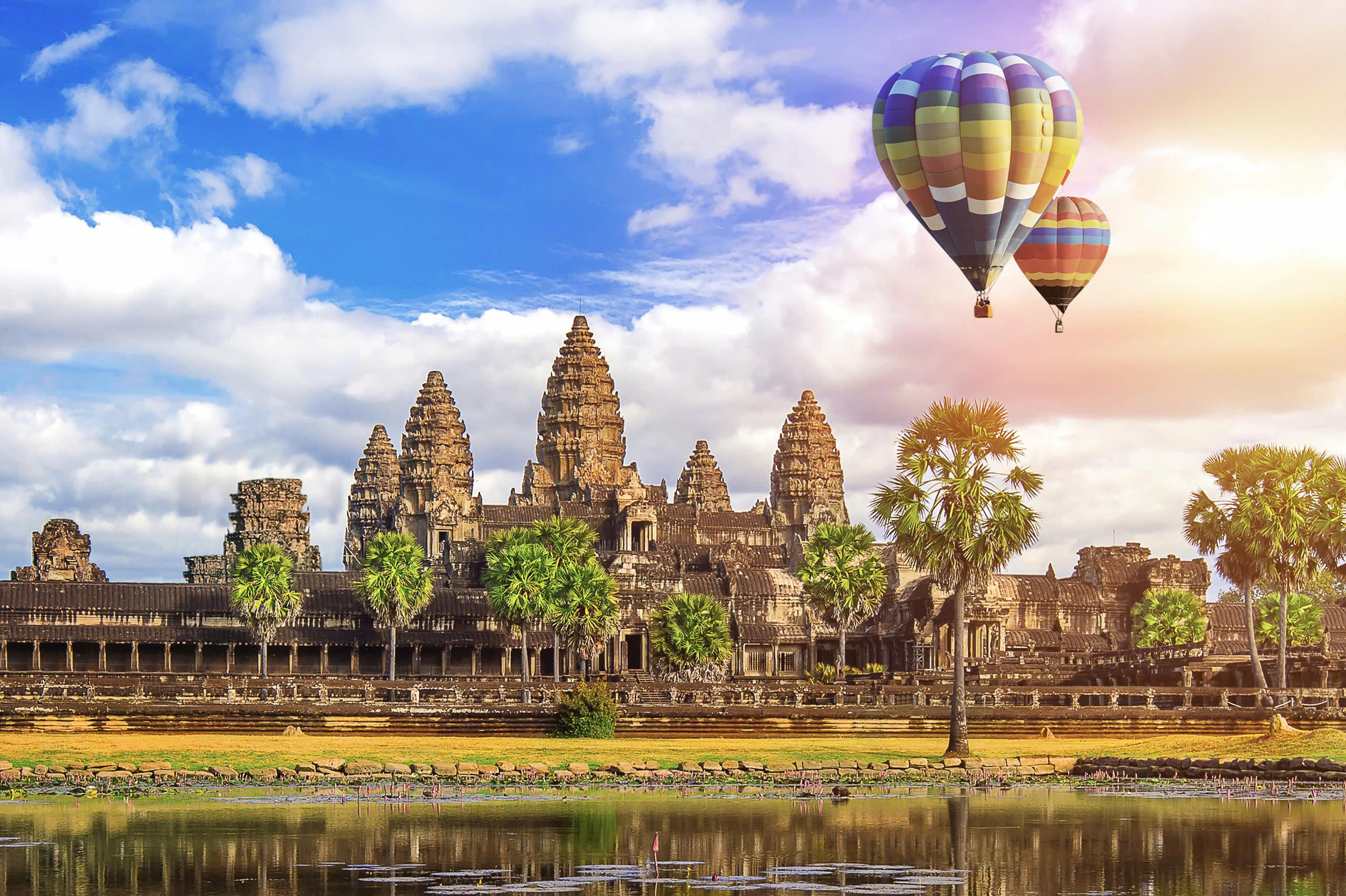
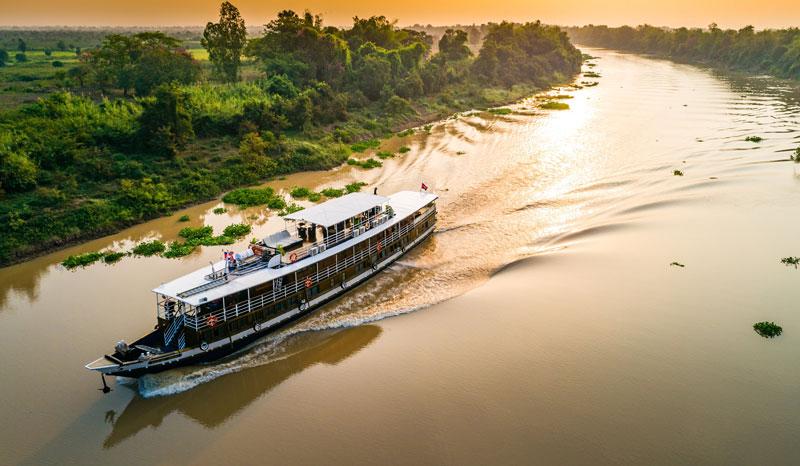
Vietnam and cambodia tours are a natural pairing. You can wrap up your Vietnam leg in the south and cross into Cambodia for Angkor Wat at Siem Reap and the history of Phnom Penh. The overland and river connections between the two countries — especially up the Mekong — make it feel like a continuation rather than two separate trips. There are well-worn tours of vietnam and cambodia that stitch this together seamlessly, and it's a route I'd happily do again.
If you've got even more time, vietnam cambodia and thailand tours extend the whole thing westward, adding Bangkok, Chiang Mai, and the Thai beaches to the mix. That's a proper multi-week expedition, and it turns a single-country holiday into a grand tour of mainland Southeast Asia. The advantage of Tet timing here is that once you leave Vietnam, you step out of the holiday's constraints and into countries operating at full tilt, so you get the festival immersion and the smooth-running tourist infrastructure, just in different chapters of the trip.
A word on booking
Whatever shape your trip takes, the season punishes procrastinators. Rooms fill, internal flights sell out, the good guides get spoken for. Working with a local operator to design a tour tet itinerary takes a lot of the stress off, because they already know which places stay open, how to handle the transport crunch, and how to slot in something special like a homestay for the actual new year. I went the independent route my first time and spent too much of it problem-solving. The trips where I let locals handle the scaffolding were the ones I actually enjoyed.
How can I customize my private tour in Vietnam to include specific sites?
A private itinerary also gives you room to specify exactly what you want to see. You might ask for extra time in Hanoi's flower markets, a particular temple or village, a family homestay during Tet, or a slower route through Hue and Hoi An. A good local operator can then adjust the transportation, accommodation, sightseeing pace, and guide arrangements around those priorities. The more specific you are about your interests before booking, the easier it is to create a Vietnam tour that feels genuinely personal rather than like a standard package.
FAQ
How many days is Tet holiday in Vietnam?
The official public holiday runs between seven and eleven days, and the exact length is set each year by the government depending on how the dates fall. But the practical reality is longer — the buzz builds for a week or two beforehand as people shop and prepare, and things ease back to normal gradually over the days that follow. So while the paperwork says roughly a week to a week and a half, plan for the feel of Tet to stretch across a broader window than that.
When do the Tet holidays in Vietnam take place?
Because it follows the lunar calendar, the date shifts every year, but it generally lands in late January or early February. If you're mapping out a trip and want to catch it, check the specific lunar new year date for your travel year well ahead, since it changes annually and everything from flight prices to hotel availability keys off that date.
Is it worth visiting Vietnam during Tet holiday?
I'd say yes, with eyes open. A tet vietnam holiday gives you something ordinary trips can't: the country doing its most heartfelt annual ritual, the flower markets, the quiet streets, families welcoming the year together. The trade-off is closed shops, higher prices, and transport that needs patience. If you value cultural depth over convenience and you plan ahead, it's genuinely rewarding. If you want everything open and cheap, pick another month.
Are shops and restaurants open during Tet holidays?
Many small shops, family restaurants, and street stalls close for the first several days of the new year, often until around the sixth day of the lunar month or a locally chosen lucky day. Hotels stay open, larger restaurants and supermarkets usually do too, and some businesses reopen early to catch customers. The key is to check opening hours in advance for any specific place you're counting on, and keep some cash and snacks handy for the gaps.
Do prices go up during a Tet holiday in Vietnam?
Generally yes. Food, transport, accommodation, and services often climb over the holiday — not because you're a foreigner, but because it's the seasonal custom and demand is high while fewer people are working. Traditional markets raise their opening prices (you can still bargain a bit), while many supermarkets and malls hold prices steady and even run promotions. Popular restaurants might add a small surcharge, usually around ten percent, which they'll flag before you order.
What should I pack and prepare for a Tet vietnam holiday?
Cash in Vietnamese dong is essential since banks close and many shops don't take cards. Pack for the region — layers and a jacket for the cool, sometimes damp north, and light clothes for the warm south. Bring bright-colored outfits and skip black, which is linked to bad luck during the holiday. Book hotels and any internal flights early, and consider arranging a guided vietnam holiday tet itinerary so someone local handles the trickier logistics.
Can I combine a Vietnam Tet trip with other countries?
Absolutely, and it's a smart move. Once your Vietnam leg wraps up, crossing into Cambodia for Angkor Wat and Phnom Penh is an easy and popular extension, with river and overland connections making it feel like one continuous journey. If you have more time, you can push on to Thailand for a fuller Southeast Asia circuit. The bonus is that neighboring countries aren't on the Tet break, so their tourist infrastructure runs at full speed while you enjoy Vietnam's festival at the start.
How do I get around cities during Tet when so many people have left?
Buses keep running, roughly from 6 a.m. to 9:30 p.m., and they're your cheapest option — just note your stop and any transfers so you don't get lost. Ride-hailing apps like Grab are the most reliable backup, since some drivers keep working through the holiday. Expect rides to be a little harder to get and slightly pricier, but you'll see the fare upfront. On the upside, the usual traffic disappears, so the actual journeys are faster and far more pleasant than normal.
Go, but go prepared
The flower market woman with the peach tree on her scooter is still one of my favorite memories from anywhere in the world. Not because it was dramatic, but because it was so completely, unselfconsciously Vietnam — busy, warm, headed home, generous even in the crush. That's what you're signing up for when you plan a vietnam holiday tet trip, and it's why, despite the closed shutters and the cash scramble and the doubled hotel rates, I'd point you toward it without much hesitation.
Just do it with your eyes open. Bring the dong. Book the rooms early. Pack the layers and the bright colors, leave the black at home, ask before you photograph someone's altar, and let a little patience carry you through the slow moments. If you can, wangle your way into a family's celebration, wrap a Banh Chung with your own clumsy hands, and stand on a street at midnight while the incense goes up. Then keep going — north to south, and maybe onward into Cambodia and beyond — and let the whole region unfold in front of you. Get the planning right and this is the trip you'll be talking about for years.
Customize This Itinerary
Let our local experts design the perfect itinerary for you. It’s free, personalized, and take less than 24 hours !
 No obligation100% personalizedBest Price Guarantee2M$ Liability Insurance
Follow Us