




Planning a cambodia trip? Let us help.
Get personalized travel plan based on your interest, budget and preferred travel dates
"Angkor Wat" temple in Cambodia has been selected as the new "Eighth Wonder of the World". Check out our new guide to know more about this remarkable achievement with interesting facts and insights about the history, significance, and architecture of
TABLE OF CONTENTS
1
A Brief History of Angkor Wat
2
How Old Is Angkor Wat in Cambodia?
3
History of Angkor Wat Temple in Cambodia
4
Which Country Is Angkor Wat Situated In?
5
Architecture and Scale of Angkor Wat
6
Why Was the Angkor Wat Temple Built?
7
Why People Call It the Eighth Wonder of the World
8
Interesting Facts About Angkor Wat
9
10
Why It Matters for Travelers Right Now
11
FAQ
Is Angkor Wat officially the 8th wonder of the world?
Is Angkor Wat a world wonder?
Why is Angkor Wat so famous?
Are there really 8 wonders of the world?
Can I combine Angkor Wat with a Vietnam itinerary?
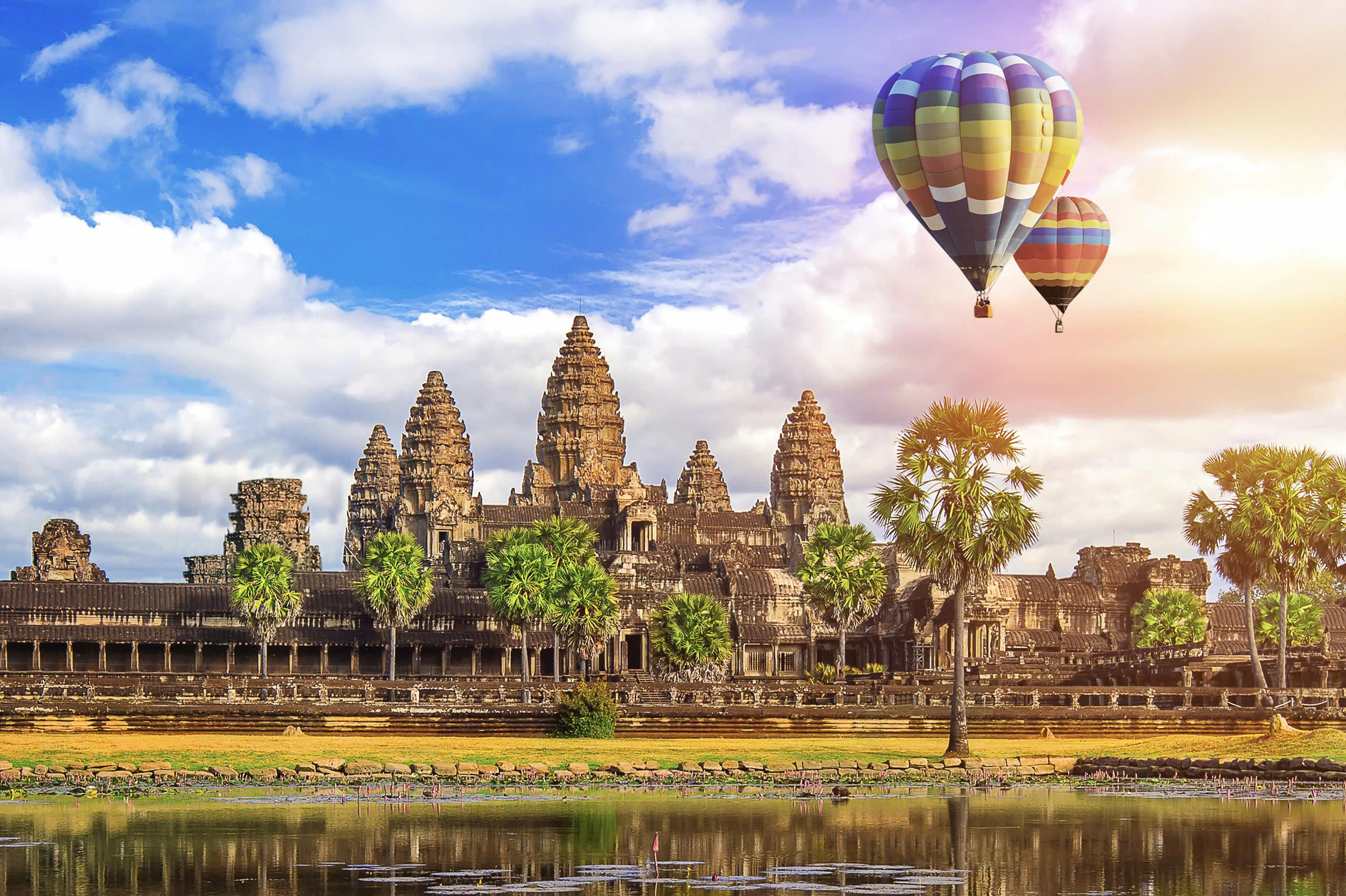
If you’re asking what is the 8th wonder of the world, Angkor Wat is one of the strongest answers you’ll find. The title isn’t an official UNESCO designation, but the label fits. Angkor Wat is the largest religious monument on Earth, the crown jewel of Cambodia’s Angkor complex, and one of the greatest architectural achievements ever built in stone. That’s why so many travelers now call it the 8th wonder of the world.
.jpg)
A Brief History of Angkor Wat
Angkor Wat was built in the 12th century under King Suryavarman II, during the height of the Khmer Empire. It began as a Hindu temple dedicated to Vishnu, then gradually became a Buddhist sanctuary as the religious life of the region shifted. That layered identity is part of what makes the place so powerful. You’re not looking at a ruin from one brief moment in time. You’re looking at a monument that kept changing, surviving, and staying sacred.
The wider Angkor area served as the center of a major Southeast Asian civilization for centuries. Today, the archaeological park stretches across roughly 400 square kilometers and preserves temples, reservoirs, canals, roads, and ceremonial spaces that still hint at the scale of the old Khmer capital. UNESCO inscribed Angkor on the World Heritage List in 1992, and international conservation work has continued ever since.
.png) How Old Is Angkor Wat in Cambodia?
How Old Is Angkor Wat in Cambodia?
Angkor Wat is nearly 900 years old, with construction beginning in the early 12th century during the reign of King Suryavarman II. Built between approximately 1113 and 1150 CE, the temple has remained one of the world's most remarkable architectural achievements for almost nine centuries.
Originally dedicated to the Hindu god Vishnu, Angkor Wat later became an important Buddhist temple. Its continued religious significance and exceptional preservation are among the reasons it remains one of Cambodia's most visited landmarks today.
History of Angkor Wat Temple in Cambodia
The history of Angkor Wat reflects the rise and legacy of the Khmer Empire. Commissioned by King Suryavarman II during the 12th century, the temple served as the empire's grand state temple and a symbol of royal authority.
Originally built as a Hindu sanctuary dedicated to Vishnu, Angkor Wat gradually transformed into a Buddhist temple as Buddhism became the dominant religion across Cambodia. Unlike many ancient monuments, the site remained an active place of worship through the centuries, helping preserve both its cultural and spiritual importance.
Today, Angkor Wat forms the centerpiece of the Angkor Archaeological Park, a UNESCO World Heritage Site recognized for its historical, architectural, and cultural significance.
Which Country Is Angkor Wat Situated In?
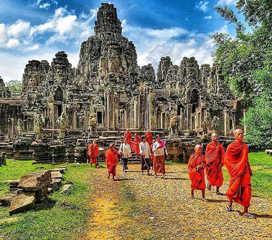
Angkor Wat is situated in Cambodia, within the Angkor Archaeological Park near the city of Siem Reap. The temple complex lies in the country's northwestern region and forms the heart of one of Southeast Asia's most important archaeological sites.
Although many travelers visit Cambodia specifically for Angkor Wat, it is also a popular extension to a wider Indochina journey. It's easy to combine with Vietnam, making it a natural addition to a Vietnam trip package, Vietnam travel package, or multi-country itinerary.
Architecture and Scale of Angkor Wat
Photos don’t prepare you for the size of this place. Angkor Wat covers about 162.6 hectares, or roughly 401 acres, making it the largest religious structure ever built. Its outer moat runs about 5.5 kilometers in total length, and the main western causeway stretches about 200 meters toward the temple entrance. It feels less like a single building and more like a stone city arranged with startling precision.
The design is deeply symbolic. The five central towers represent Mount Meru, the cosmic mountain in Hindu belief, and the surrounding moat stands in for the ocean that encircles the world. Inside, the galleries lead you past carved scenes from the Ramayana, the Mahabharata, and Khmer royal history. The bas-reliefs alone cover more than 1,000 square meters of wall space.
That’s the real reason people keep bringing Angkor Wat into conversations about the 8 wonders of the world. It isn’t just large. It’s coherent. Every gallery, tower, stairway, and carving feels part of one big idea, carried out on a scale that still seems almost unreasonable nine centuries later.
(2).png)
Why Was the Angkor Wat Temple Built?
Angkor Wat was built by King Suryavarman II as the official state temple of the Khmer Empire and as a lasting symbol of his reign. Dedicated to the Hindu god Vishnu, its design represents Mount Meru, the sacred mountain believed to be the center of the universe in Hindu cosmology.
Beyond its religious purpose, the temple demonstrated the empire's engineering skill, wealth, and political influence. Every tower, gallery, moat, and carving was carefully planned to reflect both spiritual beliefs and royal power, helping explain why Angkor Wat continues to be regarded as one of the world's greatest architectural achievements.
Why People Call It the Eighth Wonder of the World
Here’s the honest version: there is no single official body that hands out the title eighth wonder of the world. It’s an honorary label, and lots of places have been given it over the years. Angkor Wat earns the name because it checks every box people imagine a wonder should check. It’s immense, technically brilliant, culturally important, and instantly recognizable.
That also answers another common search: is Angkor Wat a world wonder? In the formal sense, it is not one of the ancient Seven Wonders, and it did not make the final New 7 Wonders list in 2007. But in the everyday way people use the phrase, yes, many travelers and writers treat it as one. Ask around long enough and you’ll hear it brought up every time people debate the 8 wonders of the world.
Put simply, people talk about eight wonders of the world because the original list feels too small for places like this. Angkor Wat is one of the few sites that genuinely makes that argument easy.
(1).png)
Interesting Facts About Angkor Wat
- It holds the Guinness World Records title as the largest religious structure ever built.
- The temple complex is the high point of Khmer architecture and includes more than a thousand buildings within its wider plan.
- Its moat and enclosure system are so large that the monument reads like a mapped landscape, not just a temple.
- The lower galleries contain vast bas-reliefs showing myth, war, ceremony, and royal power in extraordinary detail.
- Angkor remained a living religious site even after the old capital declined, which helps explain why it still feels spiritually active rather than frozen in the past.
(1).png)
Why It Matters for Travelers Right Now
Angkor Wat isn’t just a box to check. It changes the pace of a trip. You start with the sunrise silhouette, the lotus-shaped towers, the long galleries, the heat rising off the stone. Then the place keeps getting bigger in your mind. That’s why it works so well as an extension to a Vietnam country tour. Cambodia gives the trip a different texture. Quieter. Older. More monumental.
If you’re pricing a Vietnam trip package, it’s worth looking at Siem Reap before you lock anything in. A flexible Vietnam travel package can often be widened into a broader regional journey. The same goes for a Vietnam tour package that already includes major cities and a few open days.
Some travelers start with Vietnam vacations packages and add Cambodia after. Others prefer Vietnam package travel that already handles the routing for both countries. If you’re comparing Vietnam travel tour packages, look for one that leaves enough time for at least two temple days. The better Vietnam tourism packages usually allow that kind of customization. And if you like a calmer pace, Vietnam small group tours pair especially well with a few days at Angkor Wat.
FAQ
Is Angkor Wat officially the 8th wonder of the world?
No. There is no official global title for the eighth wonder of the world. Angkor Wat is widely described that way because of its size, beauty, and historical importance.
Is Angkor Wat a world wonder?
In everyday travel language, many people would say yes. In strict historical terms, it is not one of the ancient Seven Wonders, but it is absolutely one of the world’s great cultural monuments.
Why is Angkor Wat so famous?
Because it combines huge scale, symbolic design, exceptional stone carving, and a long religious history in one site. It is also the largest religious monument in the world.
Are there really 8 wonders of the world?
Not officially. Different books, travel lists, and media outlets create their own versions, so the “eighth” spot is always informal.
Can I combine Angkor Wat with a Vietnam itinerary?
Yes, and it’s a smart move if you want more than one country on the same trip. Many travelers use Angkor Wat as the standout cultural extension to time spent in Vietnam, especially when they want a deeper Indochina itinerary.
Customize This Itinerary
Let our local experts design the perfect itinerary for you. It’s free, personalized, and take less than 24 hours !
 No obligation100% personalizedBest Price Guarantee2M$ Liability Insurance
Bun Soeung

Follow Us